
6 old-school habits people in their 60s and 70s refuse to drop that make them happier than tech-obsessed youth

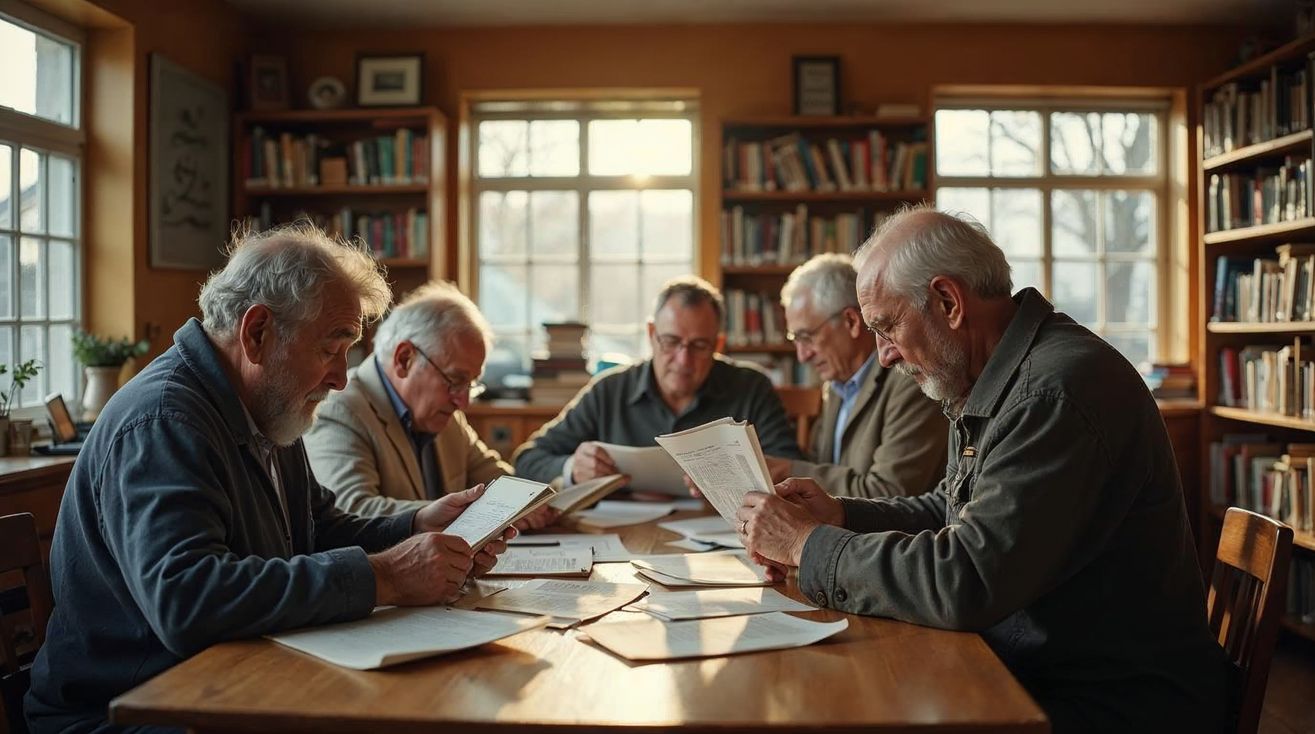
Thursday afternoon in a small-town library. The Wi-Fi flickers, half the computers sit idle, yet the room hums with quiet purpose. Not with the blue glow of teenage screens, but with gray hair, worn sweaters, and people whose arms still carry the weight of real books. At one table, a woman in her late sixties slides a handwritten recipe card across to her friend—no phones, no photographs, just yellowed paper holding a secret for the best apple cake. Across the room, an older man folds his newspaper with the care of a ritual and underlines a passage with pen, as if his day doesn’t truly begin until ink touches paper.
Outside, younger people scroll at bus stops, faces bathed in screen light. Inside, time moves slower, almost gentler. There’s something about these old habits that doesn’t feel quaint or nostalgic. It feels like a quiet form of resistance.
We live in an age obsessed with optimization, with apps that promise to solve every problem, with the assumption that newer always means better. Yet something curious is happening: the people who seem most grounded, most content, most resistant to burnout are often those who’ve simply refused to abandon their older ways. Not out of technological fear, but out of a deeper understanding that speed and connection aren’t always the same thing.
The deliberate slowness of printed news
Watch someone in their sixties open a newspaper and you’re witnessing something that’s become almost subversive: sustained attention. They shake the pages, fold them precisely, lean in with coffee in hand. For those thirty or forty minutes, the endless notification feeds don’t exist. There’s no algorithm deciding what comes next, no autoplay video hijacking their focus, no sponsored content sliding between stories.
The brain processes a fixed page differently than a chaotic feed. You know where an article begins and ends. Your mind settles somewhere instead of constantly jumping. That pause—that simple, almost boring pause—is exactly what our nervous systems have learned to crave without admitting it.
I spent time with Alain, 72, who visits the same café every morning at 8:15 for one espresso and one newspaper. “I tried reading news on my phone,” he told me, “but I end up on YouTube watching videos about tractors in Texas. Why?” He unfolded his paper like a ceremony. No pop-ups, no autoplay. Just the world, methodically presented. He took forty-five minutes to finish. When he left, he looked grounded. The news hadn’t been easier to digest—some of it was troubling—but it hadn’t felt like an assault on his attention.
According to research from the American Psychological Association, people who read from paper report better comprehension and retention than those reading identical content on screens. It’s not nostalgia. It’s neurology. There’s a reason the transition from paper to digital news coincided with rising anxiety and information overload.
Real voices instead of blue message bubbles
One of the strongest habits people in their sixties and seventies hold onto is picking up the phone to actually talk, or walking over to someone’s door. Not for important occasions. Just to say “how are you?” in a voice that wavers slightly, or with a bag of oranges in hand. There’s no typing indicator, no “seen at 18:42”, no way to craft the perfect response.
Rosa, 69, climbs down four flights of stairs every Sunday with a jar of homemade soup to knock on her neighbor’s door. The neighbor is 28, works in tech, lives behind multiple screens. “I text my friends constantly,” he admitted, “but I hadn’t actually sat face-to-face with anyone all week until Rosa showed up.” They talked about the soup, his job, her arthritis, tomato prices. Nothing Instagram-worthy. Yet he described those twenty minutes as often being the most real part of his week.
Notifications mimic connection; flesh-and-blood presence creates it. This distinction matters more than we admit. Psychologists have stopped pretending that message volume equals emotional intimacy. Loneliness isn’t about how many people you’ve texted. It’s about how many people you’ve truly felt with. Older generations, who grew up when calling was expensive and visits required effort, learned to value those moments as precious rather than as interruptions. They built their social lives around scarcity, which paradoxically made connection feel more nourishing.
The younger paradox is brutal: constant “connection” that leaves us emotionally starving. The people still willing to ring doorbells and insist on real conversation are quietly building what younger generations are desperately trying to find through apps: genuine belonging.
The hidden psychology of slow cooking
Walk into the kitchen of a seventy-year-old on a weekend and you’ll often find time literally simmering on the stove. Onions turning golden, a stew that’s been there for hours, a cake cooling on a rack. No app timers, no delivery apps. Just planned, patient cooking with hands that have chopped thousands of onions and know exactly what they’re doing.
My friend’s father, 71, prepares his “famous” tomato sauce in a kitchen that looks like controlled chaos. Seeds on the counter, olive oil splashes, a cutting board that’s survived decades. He refuses to use a blender. “It crushes the soul,” he says, chopping tomatoes by hand, slow and steady. He could have ordered food in three taps. Instead, he spent two hours humming and stirring, then called everyone to the table. The sauce was good but not magical. What was magical was how completely present he’d been with it. While cooking, he wasn’t doomscrolling or comparing his life to strangers’. He was simply there, in his kitchen, doing one thing at a time.
That kind of attention tastes better than any Michelin star. Home cooking from scratch hits what our nervous systems desperately crave: routine, sensory grounding, visible results. You start with raw ingredients. You end with a meal. There’s a clear before and after your brain can register. With digital tasks, the line blurs. There’s always one more email, one more video.
Walking without the constant soundtrack
There’s quiet rebellion in seeing a 68-year-old walking through a park with no headphones, no smartwatch, no voice notes to answer. Just a coat, a scarf, and their own thoughts. They’re not tracking steps, not listening to productivity podcasts at double speed. They walk to walk. They notice the dog that barks at the same bench every week, the child who keeps dropping his glove, the tree that changed color since last Tuesday.
My neighbor Gérard, 74, walks the same twenty-minute route every morning with no phone except for emergencies. “What do you think about?” I asked once. He shrugged. “Mostly nothing. Sometimes my wife. Sometimes what to cook. Sometimes the pigeons.” He pointed to a closed storefront. “There used to be a bakery there. I still smell bread when I pass.” That small comment stayed with me. While many of us drown ambient life with playlists, he lets the city talk to him, remind him of other times.
Walking without distraction does something rare: it leaves space for thoughts to appear without being summoned. No constant input. No curated soundtrack. Just your brain stretching its legs with your body. Younger people often say they “hate walking without music” because silence feels uncomfortable. That discomfort is revealing. It shows how unused we’ve become to being alone with ourselves. The older walkers, by choice or habit, keep practicing it. They process worries, replay memories, or sometimes feel bored—and survive it.
The underestimated power of handwritten memory
Pull open a worn coat pocket belonging to someone in their seventies and you’ll likely find a small, creased notebook. Appointments, shopping lists, birthdays, random thoughts—all crammed into messy pages with ink that sometimes smudges. They don’t scroll through fifty digital notes hunting for that one reminder. They flip pages, underline, draw tiny stars. The notebook becomes a physical extension of their mind.
My aunt, 67, plans her week at the kitchen table with a cup of tea and a blue pen. No productivity apps. Just a calendar and the slow satisfaction of drawing lines through completed tasks. “If I don’t write it, I forget,” she says. “If I type it, I forget too. I need to feel the word.” She has grocery lists stuffed in her wallet, recipes taped to the fridge, a phonebook still in a drawer. To a twenty-year-old, it looks outdated. To her, it’s visible proof that her life exists in ink, not just in the cloud.
Handwriting engages the brain differently than tapping. It forces you to slow down, to select what actually matters. Tiny movements and small decisions anchor information deeper in memory. That’s why many older adults still recall phone numbers from decades ago while younger people can’t remember three digits without checking.
“Paper doesn’t crash,” laughed a 70-year-old man at the post office, waving his worn notebook. “When I lose this, at least I know it’s my own fault.”
The surprisingly modern benefit of repetition
There’s something deeply calming about the way many seniors stick to their spots. Same café, same butcher, same bench in the park, same market day. It can look rigid from outside. From inside, it feels like belonging. They don’t chase the restaurant everyone’s talking about this week. They treasure that the barista knows their name, that the vendor remembers they like their cheese slightly stronger.
At a neighborhood market, I watched a woman in her early seventies move from stall to stall like a practiced dance. She greeted the florist by name, joked with the fishmonger, asked the cheese seller about his mother’s health. By the time she left, her cart was full, but so was something less tangible. People knew small pieces of her life: her grandson’s birthday, her recent hip surgery, her winter anxiety. Nothing dramatic, but enough to make her feel genuinely seen rather than merely tolerated.
Modern life glorifies flexibility and endless options. Older generations quietly defend stability. Rituals reduce decision fatigue, shrink the world into a human scale, and create daily rhythm that our bodies love. You don’t wonder where you’ll go or who you’ll see—part of your day is already written. That sounds limiting until you realize how much mental energy we waste on constant choice.
What the endless scroll obscures
These six habits—paper news, real calls, slow cooking, unplugged walks, handwritten notes, fixed rituals—look almost embarrassingly simple. No hacks, no optimization, nothing that can become a viral app. Just human beings repeating old gestures in a world constantly asking them to upgrade to the next thing.
Yet when you actually spend time with people in their sixties and seventies, a pattern emerges. Their days are less fragmented. Their attention is less hijacked. Their relationships, while sometimes smaller in number, feel denser, more rooted. They still struggle, get lonely, feel bored. They’re not living in a nostalgic film. But their old habits create small pockets of slowness in which contentment has room to settle.
What’s rarely discussed is how much our devices make life easier while making our minds lazier. We’ve traded depth for breadth, presence for availability. The older adults who still write things down by hand, who visit neighbors without warning, who read paper news—they’re exercising mental and social muscles that technology has quietly atrophied in the rest of us. They’re not resisting progress. They’re quietly protecting something progress was never designed to protect: time, attention, and the feeling of being genuinely known.
The question that lingers isn’t whether we should abandon our phones and apps. It’s whether we might reclaim some of what these older habits protect, not as nostalgia, but as necessary counterweight to a life that’s become too fast, too fractured, too much.


