
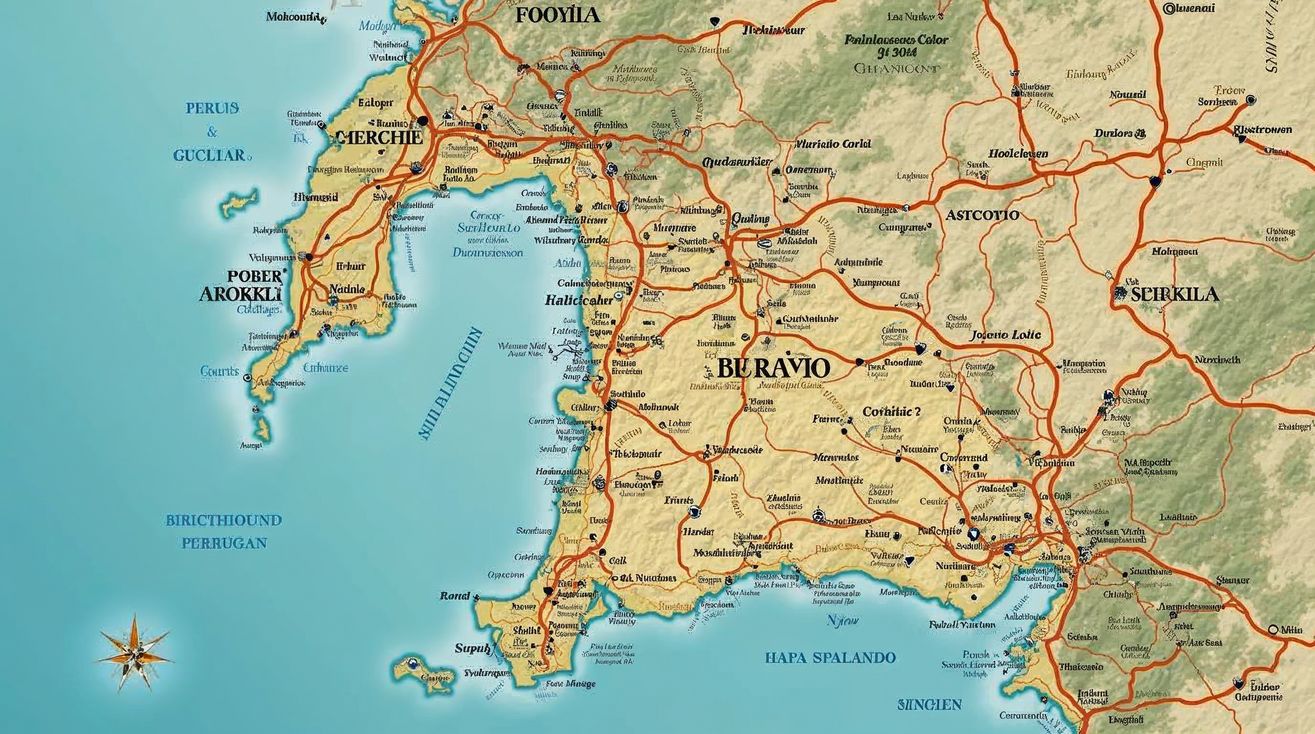

Portugal is a small country with a rich tapestry of history and culture that often goes unnoticed on the global stage. But once you dive deeper into its geography, you’ll discover a fascinating narrative hidden in its maps. From the cobblestone streets of Lisbon to the sun-drenched beaches of the Algarve, each corner of this Iberian gem tells a story. And honestly, it’s surprising—really surprising—how much you can learn from just a few pieces of cartography.
Mapping the History of Portugal
At first glance, Portugal’s maps might seem like mere navigational tools. However, they are much more than that. These maps reveal the country’s historical evolution, from the days of the Roman Empire to the maritime discoveries of the 15th and 16th centuries. Did you know that Portugal once ruled an empire stretching from Brazil to India? According to a Britannica entry, during the Age of Discovery, Portuguese explorers charted new territories, forever altering the world’s understanding of geography.
The Enchantment of Lisbon’s Layout
When you look at a map of Lisbon, you might notice something curious. The city is a mosaic of narrow streets and wide avenues, a reflection of its rich past. Walking through its neighborhoods, you can almost hear the echoes of Fado music around every corner. This distinct layout is not just an accident; it’s a direct result of historical events, like the 1755 earthquake that led to significant urban planning changes. The patterns of Lisbon’s streets are a testament to resilience and rebirth.
Geographical Diversity from North to South
Portugal’s geographical diversity is another aspect that stands out on the map. From the lush vineyards of the Douro Valley in the north to the serene plains of the Alentejo region, the country’s landscape is a feast for the eyes. And let’s not forget Madeira and the Azores—two Atlantic archipelagos that add to Portugal’s charm. These islands are not just dots on a map; they’re vibrant ecosystems with unique flora and fauna. It’s the kind of detail people shrug at… until they don’t.
The Influence of Maritime Borders
Another captivating aspect of Portugal’s maps is its maritime borders. The country’s relationship with the ocean is deeply woven into its identity. With over 1,100 miles of coastline, it’s no wonder that Portugal has a strong maritime tradition. The sea has shaped everything from the nation’s cuisine to its economy. According to a report in The Economist, the Portuguese have always been pioneers of the sea, navigating and exploring far beyond their shores.
The Unseen Stories Behind Every Map
Every map of Portugal tells a story, waiting to be discovered. Whether it’s the battle lines drawn during the Peninsular War or the peaceful borders shared with Spain today, these maps are a testament to the country’s dynamic history. They remind us that borders are not just lines on paper but narratives of conquest, cooperation, and cultural exchange. It’s amazing how a simple glance at a map can transport you back in time or propel you into the future.
So, next time you unfold a map of Portugal, take a moment to appreciate the layers of history, culture, and geography it represents. There’s more to this beautiful country than meets the eye, and exploring it through its maps can be an enlightening experience. If you’re planning a trip—or even if you’re just an armchair traveler—consider diving into the stories these maps have to offer. Who knows? You might just find yourself seeing Portugal in a whole new light.
If you’re intrigued by this glimpse into Portugal’s past and present, why not explore further? Whether it’s through travel, reading, or simply more map-gazing, there’s always more to discover. And who can resist the allure of a country that holds so many secrets in its cartographic folds?