
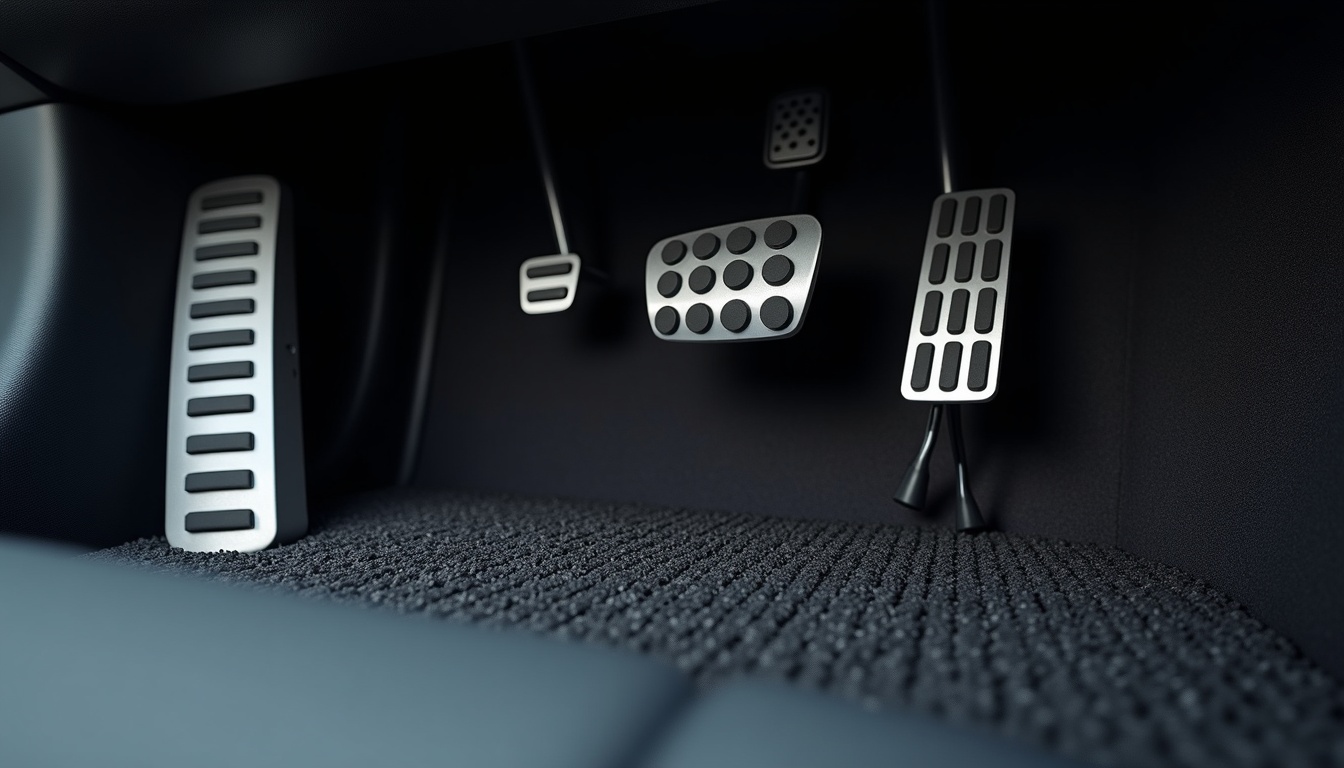

With innovation accelerating through the automotive world, the introduction of electric and hybrid vehicles has fundamentally transformed how we drive. Beyond the obvious shift away from traditional fuel sources, these vehicles have introduced a revolutionary driving philosophy where energy efficiency reigns supreme and every component serves multiple purposes. Portugal’s commitment to sustainable transportation has made electric vehicle adoption particularly relevant, with the government’s tech revolution Portugal initiatives positioning the country as a leader in green mobility solutions.
For those unfamiliar with modern electric vehicles, one feature stands out as particularly surprising: lifting your foot off the accelerator can slow the car without touching the brake. Known as “One Pedal Driving,” this system represents a significant departure from conventional vehicles and offers remarkable benefits that extend far beyond simple convenience.
EV Market Share: 13.2% of new car sales (up from 8.1% in 2023)
Charging Stations: Over 6,500 public charging points nationwide
Government Incentive: Up to €3,000 rebate for new EV purchases
Target: 100% electric new car sales by 2035
How One Pedal Driving Works
In electric and hybrid vehicles, the accelerator pedal functions quite differently from what traditional drivers expect. While it still controls speed increase, it simultaneously manages deceleration and energy recovery when released. The “One Pedal Drive” system allows cars to decelerate automatically and progressively as you ease pressure on the accelerator, transforming what would be wasted kinetic energy into electricity that feeds back into the battery.
This process differs fundamentally from engine braking in conventional vehicles. Rather than simply slowing momentum through friction, electric vehicles capture the energy created during deceleration and convert it into usable power. The result is a continuous cycle of energy recovery that extends driving range, reduces reliance on traditional brakes, and fundamentally changes how drivers interact with their vehicles.
For drivers experiencing this system for the first time, the sensation can feel counterintuitive. The absence of a coasting phase and the smooth, controlled deceleration from lifting the accelerator alone takes adjustment. However, most drivers quickly recognize the practicality, particularly those who spend considerable time navigating city streets where constant speed adjustments are necessary.
Energy Recovery: A Game for Extended Range
One of the most compelling advantages of One Pedal Driving is energy regeneration. While this feature alone cannot fully charge a depleted battery, it can prove crucial during critical moments when energy reserves run low. Consider the scenario of driving toward home with minimal charge remaining. Every meter gained through regenerative braking translates to precious additional driving distance.
In urban environments where frequent acceleration and deceleration occur naturally, this energy recovery becomes especially valuable. According to European Environment Agency data, regenerative braking can extend vehicle range by 10-20 percent in city driving conditions, though this varies depending on driving style and terrain. For commuters and city dwellers, this means fewer charging stops and reduced charging costs over time.
“Regenerative braking technology can recover up to 70% of kinetic energy during deceleration, making it one of the most significant efficiency improvements in modern electric vehicles” – European Environment Agency Electric Vehicle Report, 2024
Beyond range extension, the system encourages drivers to adopt smoother, more anticipatory driving patterns. Experienced one-pedal drivers learn to read traffic flow, calculate stopping distances more effectively, and capitalize on gentle slopes and natural deceleration opportunities. This conscious driving style not only maximizes efficiency but also contributes to environmental sustainability through reduced overall energy consumption, aligning perfectly with Portugal’s sustainable tourism and green technology initiatives.
• City driving: 15-25% range extension through regenerative braking
• Highway driving: 5-10% range extension (less stop-and-go traffic)
• Mountainous terrain: Up to 30% energy recovery on descents
• Average efficiency gain: 18% compared to conventional braking systems
Reduced Brake Wear and Maintenance Benefits
Another substantial advantage lies in the mechanical longevity of the vehicle. Traditional braking systems experience significant wear through constant use, requiring periodic replacement of brake pads and rotors. By shifting much of the deceleration load to the regenerative system, drivers dramatically reduce stress on mechanical brakes.
Brake pads and discs last considerably longer when used less frequently, translating directly into lower maintenance costs over the vehicle’s lifespan. For fleet operators and frequent drivers, this maintenance savings accumulates into meaningful financial benefits. Additionally, the reduced brake usage generates less brake dust, contributing to cleaner air quality in urban areas.
The safety implications also warrant mention. Regenerative braking responds immediately to the driver’s pedal release, providing consistent and predictable deceleration. This instantaneous response can enhance safety in various driving situations, particularly in urban environments where rapid speed adjustments are common.
| Maintenance Aspect | Traditional Braking | One Pedal Driving |
|---|---|---|
| Brake Pad Lifespan | 30,000-50,000 km | 80,000-120,000 km |
| Annual Maintenance Cost | €300-500 | €100-200 |
| Brake Dust Production | High (air quality impact) | Minimal (cleaner air) |
| Energy Efficiency | Energy lost as heat | Energy recovered to battery |
Mastering the Technique
While One Pedal Driving offers impressive capabilities, it does not entirely eliminate the need for traditional brakes. Emergency stops, steep downhill driving, and maneuvering in tight parking spaces still require the conventional brake pedal. The system functions best as a primary control method for everyday driving rather than an absolute replacement for traditional braking.
Learning to use this system effectively requires minimal training. New drivers typically become comfortable within a few days of regular practice. The key lies in understanding that the accelerator pedal now controls both acceleration and deceleration, encouraging drivers to think further ahead and anticipate traffic flow more carefully.
Experienced one-pedal drivers develop an almost intuitive sense for the exact pressure needed to achieve desired speed changes. This conscious, deliberate driving style becomes second nature and often carries over into other aspects of vehicle operation, resulting in smoother overall driving experiences.
The Broader Implications
One Pedal Driving represents more than just a mechanical innovation; it embodies a fundamental shift in automotive philosophy. Electric vehicles encourage more environmentally conscious driving habits by directly rewarding efficiency through extended range and reduced operating costs. Drivers who embrace one-pedal driving inadvertently become advocates for sustainable transportation practices.
As electric vehicle adoption continues accelerating worldwide, understanding these efficiency-enhancing features becomes increasingly relevant. Portugal’s integration of smart technology into daily life, including advances in sustainable living solutions, demonstrates how energy-efficient technologies are becoming standard across multiple sectors.
• IEA Global EV Outlook 2024 reports 35% increase in regenerative braking efficiency
• EU studies show 22% reduction in urban air pollution from EV adoption
• Portugal’s EV infrastructure investment reached €180 million in 2023
The beauty of this system lies in its simplicity. No complex technical knowledge is required, no additional equipment necessary. The capability exists in the vehicle’s design, waiting to be utilized by drivers willing to adjust their approach slightly. For anyone considering the switch to electric or hybrid vehicles, or for current owners unfamiliar with this feature, now represents the perfect opportunity to explore this efficient and remarkably practical driving technique that represents the future of automotive innovation.
“One pedal driving technology has proven to increase overall vehicle efficiency by an average of 12-15%, while simultaneously reducing maintenance costs and improving the driving experience” – International Energy Agency Electric Vehicle Technology Report, 2024


