An AI detector questions the human origin of one of history’s most important texts

The world of artificial intelligence has thrown us yet another curveball, and it’s an unexpected twist that feels almost surreal. Imagine, if you will, a revered document like the U.S. Declaration of Independence being flagged as 98.51% AI-generated by a modern detector. It’s a scenario that borders on the absurd, yet it has sparked serious debate about the reliability of these tools in our increasingly digital world.
An 18th-century Manifesto Meets 21st-century Technology
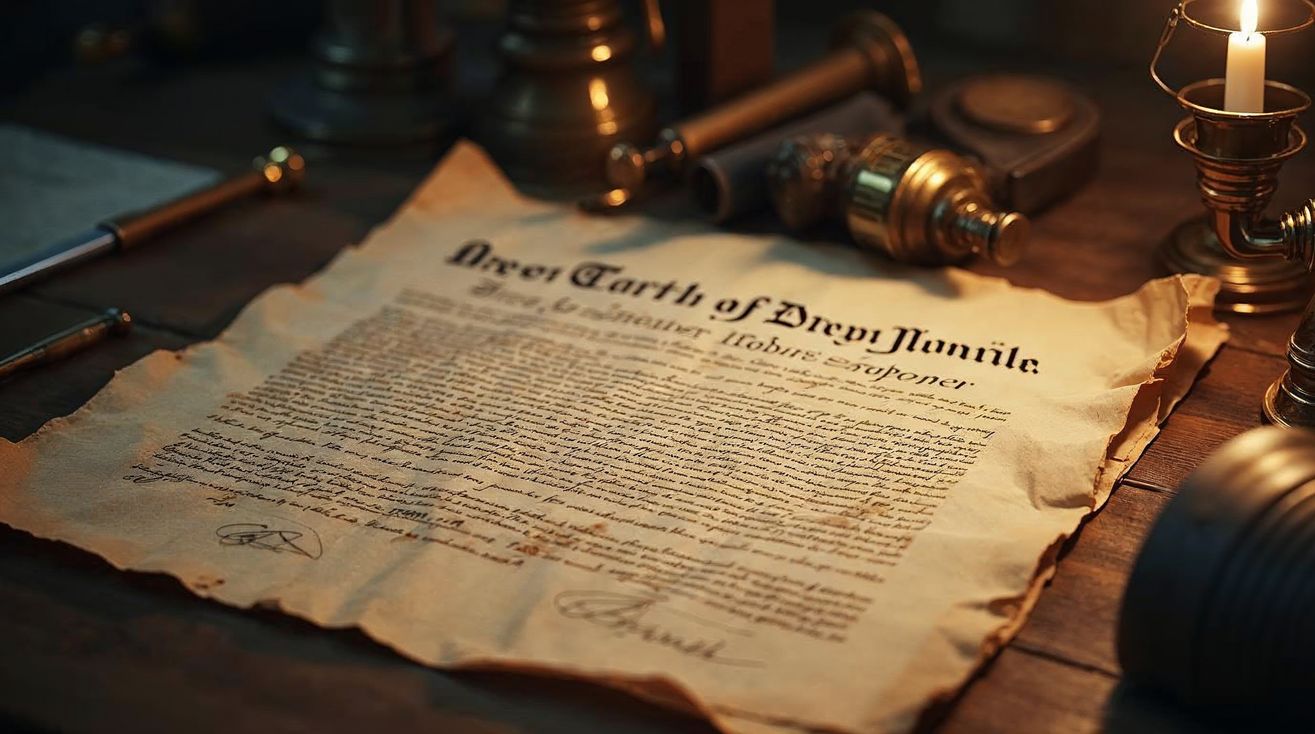
Drafted in 1776, the Declaration of Independence is a cornerstone of American history, often called the nation’s birth certificate. But now, more than two centuries later, it’s been called into question—not by historians or academics, but by an AI-content detector. This software, as reported by SEO expert Dianna Mason, claimed the Declaration was almost entirely machine-written, with a stunning confidence score exceeding 98%. It’s a bold accusation that stands in stark contrast to historical facts.
Let’s be clear: in 1776, there were no computers, no electricity, and certainly no AI. So, what does this say about the tools we trust to authenticate our most important texts? According to a report from The Guardian, this incident highlights a growing concern—how often these AI detectors get it wrong.
When Classics Are Dubbed “Fake”
The Declaration isn’t alone on this list of mistaken identity. Other historical documents and even passages from the Bible have been flagged as AI-generated. Legal documents from the pre-internet era, and religious texts that have been meticulously preserved and translated over centuries, have similarly been mislabeled.
These false positives have led to headlines disparaging the efficacy of AI detectors. Although it’s an oversimplification to say these tools “don’t work,” it’s undeniable that the frequency of these errors is worrisome. As noted by Mason, it’s not just an academic issue; it’s a real problem for students and professionals who rely on these tools for credibility.
Why AI Detectors Misfire
To understand why AI detectors stumble, we need to delve into how they function. These tools analyze text for patterns typical of AI-generated content. They look for smooth, predictable sequences and penalize repetitive structures. Historical and legal texts often embody these traits, making them susceptible to being flagged by the AI’s algorithms.
Moreover, these detectors are trained on contemporary AI outputs and modern online writing. When faced with older prose or intricate legal language, their algorithms may falter, overestimating the likelihood of machine authorship.
Real-World Consequences
For a student or professional, being flagged by an AI detector can have serious implications. Educational institutions and companies across the U.S. and UK are employing these tools to combat plagiarism and verify authenticity. But when a detector flags a text, the onus often shifts to the individual to prove their innocence—a burden not easily borne.
People find themselves defending the authenticity of their work based on a probability score they didn’t even know existed.
In some cases, students have faced disciplinary actions despite having drafts and notes that clearly demonstrate their work’s originality. The fear is that many such injustices remain unreported, particularly among those without adequate support systems.
The Question of AI-Generated Texts
Dianna Mason poses an interesting perspective. Instead of focusing on whether a text is AI-generated, she asks if its origin really matters to readers. Right now, many still view AI-generated content with suspicion, questioning its authenticity and ethical implications. But this sentiment might evolve as AI becomes as commonplace as spellcheck and predictive text.
Some argue that for everyday texts—like product descriptions or weather reports—the distinction between human and AI authorship may become irrelevant. Accuracy and clarity could trump concerns about the writer’s identity.
A Cultural Shift in Perception
Entrepreneurs and technologists often view AI as just another tool, much like a calculator or a computer. If AI-supported writing meets ethical and quality standards, its human users should be judged on their deployment of the tool, not on whether every sentence was human-crafted.
The real issue lies not in the tool, but in society’s ethical and legal boundaries.
We need new norms—clearer disclosures about AI usage, better digital literacy education, and safeguards against over-reliance in sensitive domains like medicine and law.
Ownership and Responsibility in AI Texts
AI-generated content raises complex questions about ownership and responsibility. Generative models learn from vast datasets that include human-created works, often without explicit consent. This leads to a pressing question: who owns the resulting content?
| Issue | Why it matters |
|---|---|
| Academic integrity | Ensures degrees maintain their value. |
| Author rights | Protects writers from unpaid reuse of their ideas. |
| Public trust | Preserves the integrity of news and political messaging. |
| Accountability | Assigns responsibility for content creation. |
Regulators are beginning to address these issues, with proposals for watermarking AI outputs and mandatory disclosure labels.
The Balancing Act: Detection and Judgment
AI-detection tools can be beneficial, flagging suspicious essays or revealing spam. But problems arise when these scores are the sole arbiter of authenticity. Consider a scenario where a school automatically fails an assignment based solely on an AI score. Or a publisher withholds payment until a writer proves their work isn’t AI-generated.
The Declaration of Independence’s brush with AI detection serves as a cautionary tale. It urges us to blend new detection tools with old-fashioned judgment. As readers and writers, it’s crucial to remember that a score on a dashboard is not definitive proof. So, let’s stay curious, keep asking questions, and embrace the evolving landscape of writing and technology. After all, the future of reading and writing is what we make of it. Keep exploring, keep questioning, and let’s navigate this brave new world together.


