
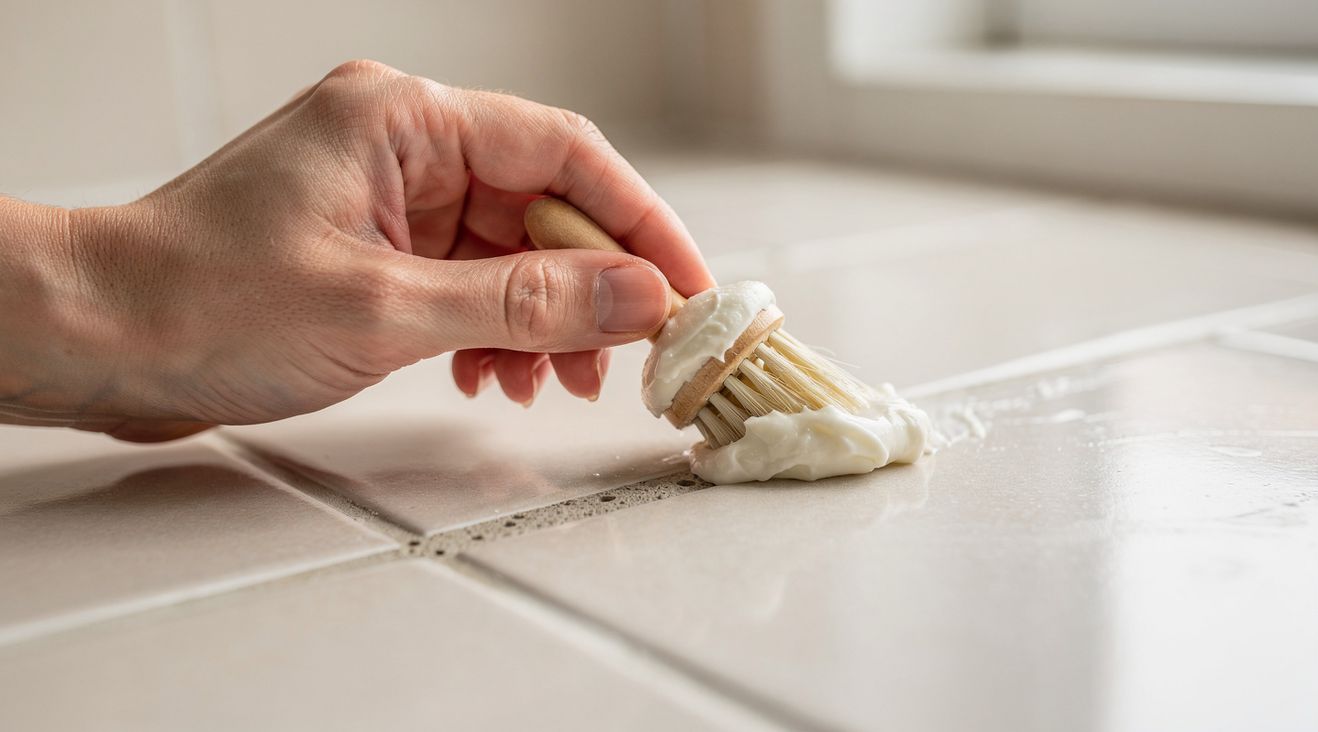

You walk into your bathroom, the tiles gleam under the light, and yet something nags at you. The grout between them—that thin line holding everything together—looks worn, gray, almost ashamed. You’ve mopped, you’ve sprayed with various cleaners, and still those lines seem to absorb and hold onto every speck of dust, soap residue, and time itself. It’s a peculiar frustration: the tiles aren’t dirty, but the grout makes the entire room feel compromised, like a photograph with a smudged lens.
This isn’t merely a cleaning problem. It’s a visibility problem. Grout represents the invisible grid that defines how we perceive cleanliness, and when it fails to reflect that standard, it creates a psychological weight in spaces where we expect to feel refreshed. Most people respond by reaching for industrial-strength chemicals or spending Sunday afternoons on their hands and knees with a toothbrush. But there’s another approach, one that hinges on understanding how porous materials work and what simple household chemistry can accomplish.
The solution has been circulating on social media for months: three common ingredients mixed into a paste, applied for fifteen minutes, then wiped away. The results appear almost miraculous to those who try it. Yet behind this viral moment lies something worth examining—not just how to clean grout, but why we’ve accepted such inefficient methods for so long, and what this reveals about household maintenance culture.
The hidden problem with how grout traps everything
Grout is porous in ways most people never consider. It’s made from sand and cement, which means its surface isn’t smooth like tile—it’s riddled with microscopic gaps that act like a magnet for particles. Dust settles into these crevices. Soap scum accumulates. Moisture brings mold spores. Cooking grease finds its way there. And once these substances embed themselves, standard floor cleaners simply wash over the top, polishing the tiles while leaving the grout untouched below.
A homeowner from Lyon described her routine to me with a mixture of resignation and dark humor. Every Sunday afternoon, she’d kneel on her kitchen floor with an old toothbrush and bleach gel, working methodically through each grout line until her back protested. The process took hours. The fumes lingered for days. The results lasted perhaps two weeks before the gray film returned, as if the grout had a memory of its neglect.
This cycle—clean, fade, panic, clean harder—has become normalized. We’ve accepted that grout maintenance requires either chemical aggression or physical punishment. According to EPA guidelines on household cleaning products, many conventional grout cleaners contain volatile organic compounds that linger in indoor air long after application, yet homeowners persist because they believe no gentler alternative exists.
How three ingredients do what expensive cleaners can’t
The mixture is deliberately simple: three tablespoons of baking soda, one tablespoon of white vinegar, and one tablespoon of dish soap, stirred until creamy. When these combine, something chemical happens that distinguishes this approach from simply using each ingredient alone. The baking soda provides mild abrasive action without scratching or damaging grout. The white vinegar introduces a gentle acid that dissolves mineral deposits and soap buildup without the harsh fumes of commercial degreasers. The dish soap acts as a surfactant, helping the mixture penetrate and rinse cleanly.
Applied directly to grout lines with a soft brush, the paste is left undisturbed for ten to fifteen minutes. This contact time is crucial. Unlike aggressive scrubbing, which merely moves grime around, the mixture’s chemical reaction slowly loosens embedded dirt from the porous matrix. When you wipe it away, the grout has genuinely lightened—often dramatically.
The London renter who shared her experience captured the exact moment this approach shifts perspective:
“I was convinced the grout was permanently stained. I thought the landlord would charge me for ‘deep cleaning’ when I left. After two rounds with the baking soda mix, the grout looked so clean he asked if I’d secretly hired professionals.” – Renter, London
What makes this technique distinct isn’t just effectiveness—it’s gentleness. Aggressive cleaning tools damage grout over time, creating micro-fractures that eventually become visible cracks. This mixture respects the integrity of the material while still achieving professional-level results. The lack of toxic fumes means you’re not exchanging a clean floor for compromised indoor air quality.
The rarely discussed cost of overlooking maintenance details
There’s a pattern in how people maintain their homes: we invest heavily in visible upgrades while neglecting invisible infrastructure. Bathroom tiles are replaced, fixtures are modernized, walls are repainted. Yet the grout—the material literally binding everything together—receives minimal attention until it becomes visually unbearable.
This inattention has consequences beyond aesthetics. Deteriorating grout allows moisture to penetrate behind tiles, where it causes mold growth, wood rot, and structural damage. What begins as a cosmetic issue becomes a costly repair. Regrouting an entire bathroom or kitchen runs into hundreds or thousands of dollars. A fifteen-minute maintenance routine, performed a few times yearly, prevents this trajectory entirely.
The psychological impact matters equally. A study by environmental psychologists confirms that people’s perception of cleanliness in their home environment directly affects stress levels and sense of control. When grout is visibly dingy, the entire space feels contaminated despite tiles being pristine. The reverse is equally true: when grout is bright and clean, the entire room appears renovated even if nothing else has changed. This transformation often costs less than ten dollars and requires no special skills.
Why this method won’t appear in commercial cleaning products
The ingredients in this mixture are commodities—cheap, accessible, and unpatentable. A commercial cleaning company has no financial incentive to promote a solution that uses products people already own. The market rewards complexity, proprietary formulas, and brand loyalty. A paste made from baking soda and vinegar threatens that model, which is precisely why it remains a home hack rather than mainstream advice.
Marketing shapes what we believe works best. Expensive grout cleaners promise speed and power, using language that suggests you need industrial intervention for a home problem. The reality is simpler and less profitable: gentle chemistry, patience, and regular maintenance outperform aggressive approaches. Manufacturers don’t advertise this because it’s not in their business interest.
This gap between what works and what gets promoted reveals something about consumer culture. We’re conditioned to believe that better results require stronger chemicals, louder machinery, professional intervention. Yet the evidence from countless households suggests the opposite: a modest paste, left to work quietly, achieves results that people photograph and share because they can’t believe the transformation.
The deeper shift in how we should think about home maintenance
The grout problem, when examined closely, represents a broader failure in how we approach household care. We’ve separated maintenance into visible and invisible tasks, investing heavily in appearance while ignoring the materials that hold everything together. This reversal—prioritizing Instagram-worthy surfaces over functional integrity—eventually catches up to us as repair costs and structural problems.
What this three-ingredient solution teaches is that effective home care often involves humble materials, patience, and regularity rather than intensity. Consistency prevents crises. A mild paste applied every few months preserves grout for decades. Aggressive cleaning twice a year damages it. Yet our cultural narrative celebrates the dramatic intervention, the deep clean, the moment of transformation—rarely the quiet maintenance that prevents problems from emerging.
The longevity of this home remedy across years and continents suggests it taps into something people need: permission to trust simple methods, to believe that household problems don’t require expensive solutions, to maintain their spaces without guilt or intimidation. When someone wipes away the paste and sees bright grout, they’re not just seeing a cleaner floor. They’re discovering that they already possessed the tools and knowledge to care for their home effectively.


