
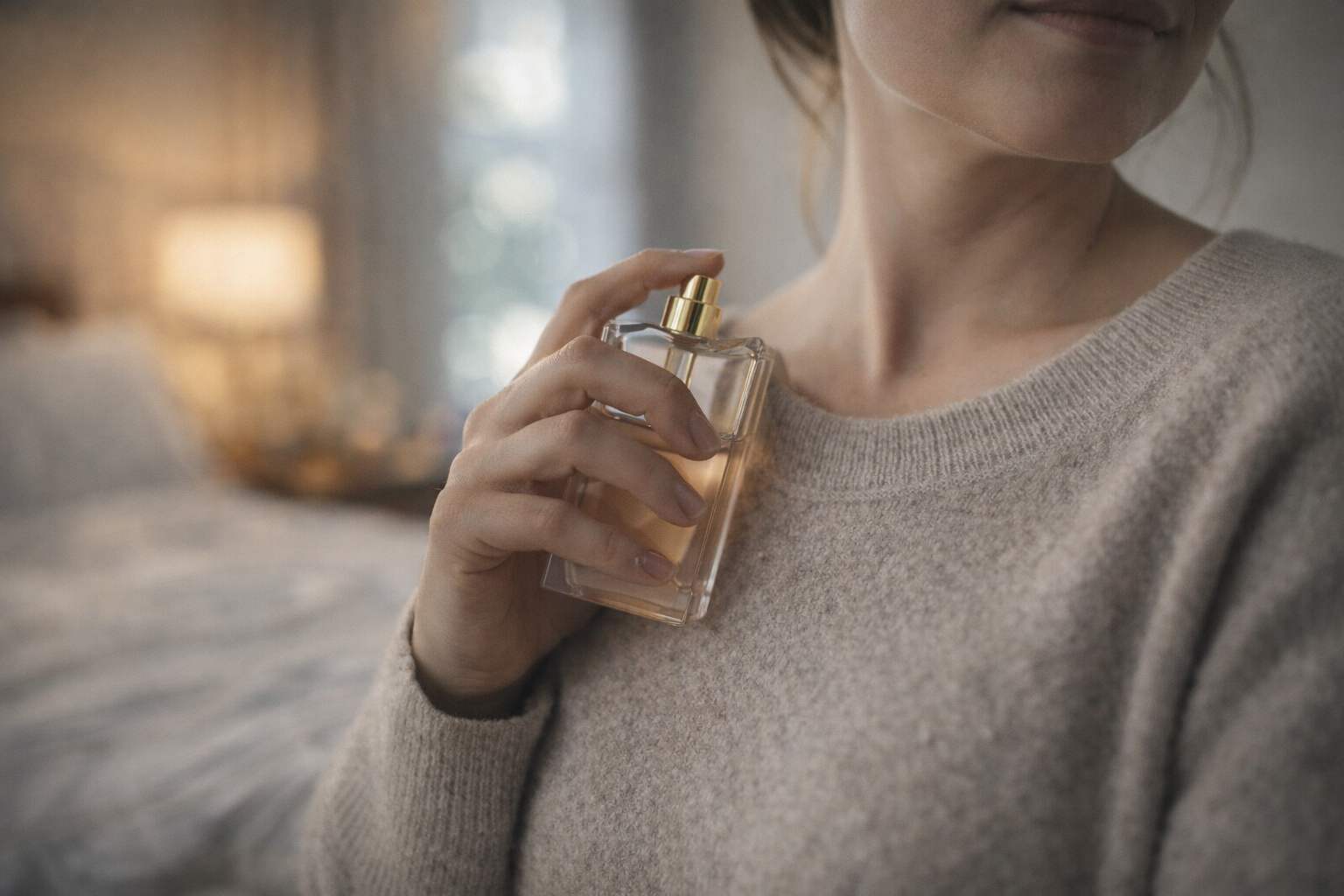
You shouldn’t rub or spray on your wrists or neck: a simple trick to make perfume last from morning to night

You check your reflection one last time before leaving. Outfit on point, hair cooperating for once, a few swift spritzes of your favorite perfume on your wrists and neck. You rub them together, almost automatically. Two hours later, squeezed into the metro or hunched over a laptop, the scent has already disappeared, as if it never existed. You paid good money for that bottle, yet by late morning, you’re left with nothing but a faint memory.
Perfume isn’t just smell. It’s mood, presence, confidence. It can make you feel dressed even in jeans and sneakers. So when it vanishes by lunchtime, it’s not just the fragrance that’s gone, it’s a part of the armor you put on to face the day. And the worst part is: one tiny, well-meant habit is often sabotaging everything.
Why rubbing your wrists is silently killing your perfume
Watch people in the perfume aisle and you’ll see the same little choreography. Spray on the wrist, dab on the other wrist, rub up to the neck, maybe behind the ears. It looks refined, expert, like something passed down from a glamorous aunt. Yet that polished gesture is one of the biggest reasons scent disappears so quickly on the skin.
When you rub, you’re not helping the perfume settle. You’re heating it, crushing the structure of the fragrance, and speeding up evaporation. The delicate top notes explode and vanish. What should have evolved slowly over hours burns out in minutes. Picture a night out. You carefully apply a designer perfume right before leaving. In the taxi, you can still smell the citrus opening. By the time you reach the restaurant, the sparkle is gone, leaving only a faint, confused trace. You think the perfume is weak or badly formulated. The reality is often much more basic: your application ritual worked against you.
Some perfumers say they can literally hear that sticky rubbing sound in their nightmares. They design accords to unfold in layers, like a story. Top, heart, base. Citrus, flowers, woods. Rubbing compresses all three chapters into one short, blurry page. No wonder it doesn’t last. On the skin, perfume behaves like a living thing. It reacts to heat, friction, sweat, hydration, even the soap you used in the morning. Rubbing and spraying on hyper-exposed areas like the wrists and neck adds extra movement, contact with clothes, constant washing, and sunlight. This combination doesn’t just fade the scent faster, it can slightly distort it.
The simple, quiet way to make your perfume last all day
The most effective trick is almost disappointingly simple: spray, then leave it alone. Don’t rub. Don’t dab. Let the droplets land and settle on their own. Aim for spots that are warm but more protected than wrists and bare neck. Think behind the knees, the lower abdomen, the sides of the torso, along the collarbone under clothing.
Textile is your secret ally. A light mist on your sweater, the inner lining of a blazer, or the scarf near your chest holds scent longer than skin. Just keep it away from delicate silk or white fabrics that stain easily. Two sprays under clothes, one on fabric, and you’re often covered from breakfast to bedtime. Most of us spray perfume the way we’re in a rush: fast, on the most obvious spots, then out the door. Nobody’s waking up early to engineer a perfume routine worthy of a luxury boutique. Yet changing the location of your sprays costs nothing, adds ten seconds, and transforms the result.
Instead of the classic shot to the wrists and neck, try a small cloud in front of you and walk through it. Then add one direct spray on the chest, under your shirt or sweater. The scent clings to the fabric, warms with your body temperature, and rises gently throughout the day instead of shouting for an hour and then disappearing.
“Perfume should whisper from the skin, not scream and then go silent. The way you apply it matters as much as the fragrance itself.” – Paris-based perfumer
The often overlooked role of skin hydration in fragrance longevity
Most fragrance guides focus on application technique, but they skip over something equally crucial: the condition of your skin itself. Perfume clings to hydrated skin like it’s magnetized. Spray the same fragrance on dry skin versus properly moisturized skin, and you’re essentially wearing two different products. The dry skin version burns off in hours. The hydrated version unfolds gradually, lingers, becomes part of your natural scent profile.
This isn’t marketing speak from a skincare brand. According to fragrance chemistry resources, the molecular adhesion between fragrance alcohol and hydrated skin cells is measurably stronger than on dehydrated skin. Using an unscented body lotion or even a light hydrating oil right after showering, before perfume application, can extend longevity by hours. Some people swear by matching the fragrance’s scent family to their body lotion, creating subtle layering that reinforces the overall scent experience.
The timing matters too. Applying perfume to still-damp skin after a shower gives those molecules something to grip. If you wait until your skin is completely dry, you’ve already lost a crucial window. This detail separates the people who complain their expensive perfume lasts two hours from those who get a full day of wear from the exact same bottle.
Beyond the wrist: reimagining where fragrance actually lives on your body
Your wrists and neck are exposed to constant friction. You rest your chin on them while thinking. Your wrist passes your face as you eat lunch. Your neck rubs against your scarf or shirt collar. These micro-movements, repeated thousands of times throughout the day, gradually strip away fragrance molecules. The areas you thought were ideal are actually some of the worst possible choices for longevity.
The back of your ears, protected by hair, stays warmer and less touched. The inside of your elbows rarely sees direct sunlight or friction. Your collarbone, covered by most necklines, creates a pocket of warmth that diffuses scent upward to your face and outward to your immediate presence. Behind the knees seems counterintuitive until you realize that area rarely comes into contact with anything, rarely gets washed through the day, and sits on a major pulse point that gently warms the fragrance throughout hours of walking and movement.
Rethinking your scent ritual, one discreet spritz at a time
Once you stop attacking your perfume with frantic rubbing, something strange happens. You notice how it changes on your skin from morning to afternoon. The citrus you loved at 8 a.m. slowly gives way to a softer floral, then by late day, a warmer, almost intimate trail. Your fragrance starts to live with you instead of racing ahead and vanishing.
You might even catch coworkers leaning in a little closer, not to be nosy, but because they sense something pleasant and subtle without being able to pinpoint it. That’s the sweet spot. The difference often isn’t a more expensive perfume, just a smarter, calmer way of wearing the one you already own. Perfume is one of those details that seems superficial from the outside, yet shapes how we move, how we’re remembered, how we remember certain days. A scent that lasts quietly from morning coffee to late-night messages can anchor a moment in time, almost like a soundtrack. Once you’ve experienced that quiet persistence, it becomes hard to go back to those rushed, noisy, fast-fading spritzes on the wrist and neck that disappear before the day has really begun.


