
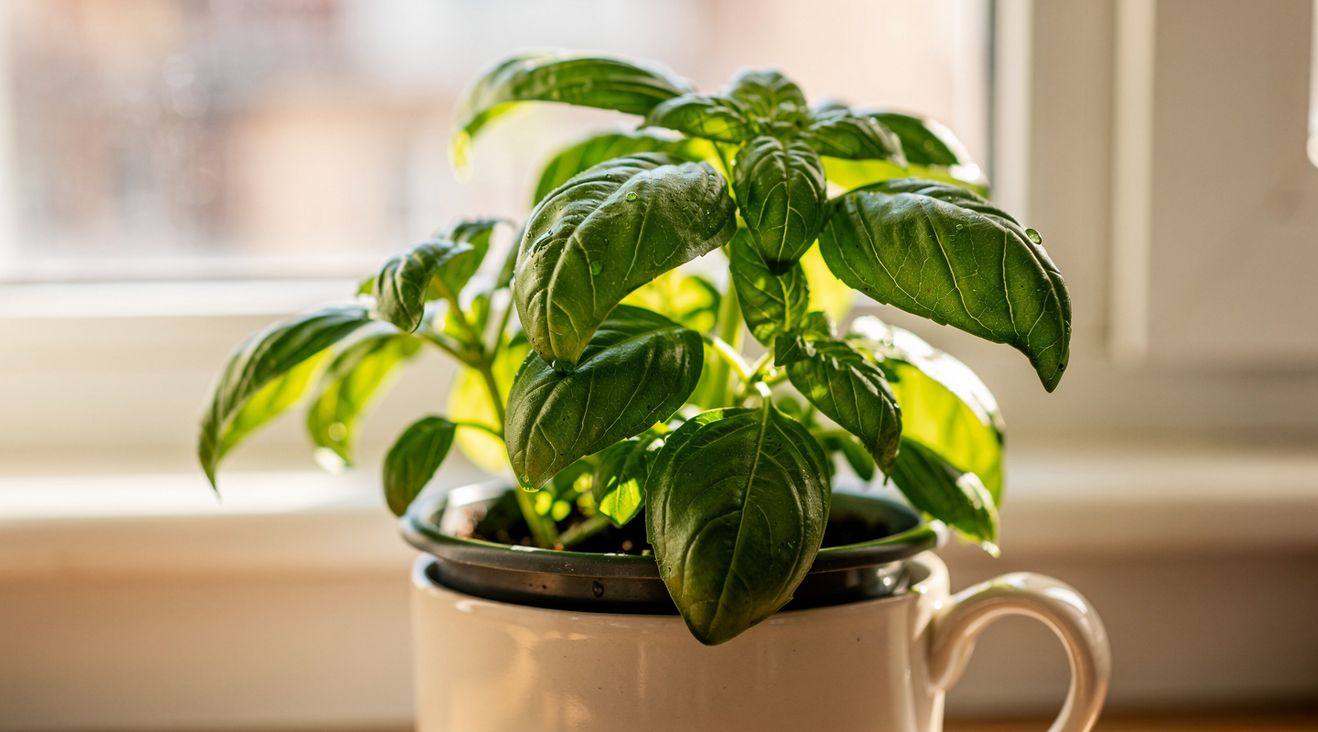
Keep basil alive indoors with the double pot water mug trick and a daily pinch

You bring home a pot of basil from the supermarket, and for three glorious days, your kitchen smells like summer. By day five, the leaves are yellowing. By day ten, it’s a drooping ghost of what it was. You toss it out, tell yourself you’ll try again, and repeat the cycle six months later. This isn’t a failure of green thumbs or neglect. It’s a design problem baked into how supermarket basil is grown and sold.
The curious thing about basil is that it doesn’t die suddenly. It surrenders gradually, one leaf at a time, while you’re left wondering what you did wrong. The answer involves a small mug, a daily pinch, and understanding why those perfectly green pots in the store are engineered to fail in your home.
Once you know what’s actually happening, keeping basil alive becomes less mysterious and more obvious. The trick isn’t complicated, but it does require a shift in how you think about what the plant needs.
Why supermarket basil collapses on your windowsill
Walk into almost any kitchen with a dead basil pot, and you’re looking at a plant that was set up for failure before it ever left the nursery. Those neat, dense little plastic containers hold more than 30 seedlings packed into soil that barely has room for their roots. It looks lush because there are so many stems packed together, but underneath that green abundance is a matted tangle of roots with nowhere to expand.
The real problem is moisture management in those thin plastic pots. Basil is genuinely thirsty, but it’s also sensitive to waterlogging. In a small pot, the soil dries out in hours under bright light, then floods if you water to compensate. The top looks fine, but the roots are stressed. You water more. Fungi move in. The plant doesn’t scream about this—it just slowly shuts down. A friend of mine bought three identical basil pots one summer from the same shelf, used the same windowsill and watering approach for all three. Two lasted a week. The fourth one, treated differently, made it through the entire season.
Light matters too, though not always in the way people think. Basil needs bright, indirect light. A south-facing window can turn into a magnifying glass at midday, scorching leaves rather than nurturing them. Combined with inconsistent watering and overcrowded roots, the plant simply gives up before you even realize it’s struggling.
The double pot method: turning a mug into a moisture buffer
The solution is less about fancy equipment and more about clever physics. Take your basil in its plastic nursery pot and place it inside a slightly larger container—a mug, bowl, or cachepot with no drainage holes. Pour a shallow layer of water into that outer container, just enough that the drainage holes of the inner pot sit at or slightly above the waterline. The plant then drinks what it needs, when it needs it, instead of you making guesses from above.
This isn’t watering from the top anymore. It’s passive wicking, the same principle that keeps a potted orchid stable for weeks. The roots pull moisture upward gradually rather than sitting in either drought or deluge. One colleague swore her kitchen was “a basil graveyard” until she tried this with a wide ceramic mug she actually liked looking at. She filled it halfway with water around the inner pot and moved on with her day. For the first time, her basil didn’t droop between breakfast and dinner. The leaves stayed firm. The stems thickened.
The key is keeping that water level low enough that roots have to reach for it. If the pot sits submerged in water, you’ve just created a fungal spa. Check it daily like you’d check a kettle, topping up when the level drops. The consistency matters far more than perfection. Basil prefers steady conditions over dramatic swings, and this method delivers exactly that.
The daily pinch: how to make basil branch instead of bolt
Most people harvest basil the wrong way, and this might be the single biggest reason their plants fail to thrive. They pluck the big lower leaves first because those look “ready.” That approach leaves you with a single tall stem that eventually flowers and stops producing. The real harvest technique is the opposite: a tiny pinch at the very top of the plant, multiple times a week.
Look at any basil stem closely. You’ll see small pairs of leaves with a growing tip between them, forming a little V shape. Pinch just above that fork, removing the tiny tip. Do this on one or two stems daily, rotating which ones you choose, and the plant starts branching sideways instead of reaching upward. A neighbour used to show off her impressively tall basil plant like it was an achievement. Then it would suddenly flower and collapse. Once she switched to the daily top pinch, her next plant developed six or seven short, bushy arms loaded with soft leaves instead of one lonely stem with sparse foliage.
“The pinch is how you tell the plant it’s not done growing yet,” according to gardening practice established through years of home cultivation. “If you never touch the tip, the plant thinks its job is finished and rushes to flower.”
This small cut triggers branching. You’re not being gentle—you’re being direct.
The hidden benefits nobody mentions when they talk about herb gardening
Once these two habits take hold, something unexpected happens. Growing basil stops feeling like plant maintenance and starts feeling like a small daily ritual that gives you permission to slow down. You’re not frantically watering on Sunday to save the week. You’re checking a mug, pinching a stem, moving through your kitchen with the kind of casual attention that used to characterize how people interacted with living things in their homes.
According to horticultural research on houseplant care, consistent small actions with living plants create measurable differences in both plant health and human wellbeing. The daily pinch in particular requires you to actually look at your plant, notice its growth patterns, and make a deliberate choice. This isn’t mindless watering.
There’s also something quietly revelatory about realizing that many failures in your home aren’t actually about your competence—they’re about initial conditions. A basil plant that thrives reminds you that other things might be failing simply because they were set up wrong, not because you’re incapable. Once you’ve seen this shift with one plant, you start noticing it everywhere.
Making it sustainable beyond the first month
The long-term reality of keeping basil alive indoors is less romantic than the initial success. You need to monitor that water mug regularly. Pinching requires genuine daily attention, not just when you remember. If you miss a few days and the plant bolts, you can still cut off the flower buds and encourage new branching, but you’ll have lost some growing time.
Consider repotting overcrowded supermarket basil into something slightly larger after a few weeks, if you plan to keep it beyond one season. The plastic nursery pot works initially with the double pot trick, but it’s never ideal long-term. Some people give up on the entire project after a month. Others find that once the habit settles in, it requires almost no mental effort, just the small daily gesture of walking past and pinching one stem.
The basil plant that finally lives through three seasons becomes less an achievement and more a baseline. You stop thinking about whether you’re “good” at this and start thinking about what a steady, small routine actually looks like in your kitchen. The mug refills. The leaves multiply. You use them. The plant keeps growing. It’s the kind of quiet success that doesn’t announce itself, but once you’ve experienced it, it changes how you approach other things that seem impossibly fragile.