
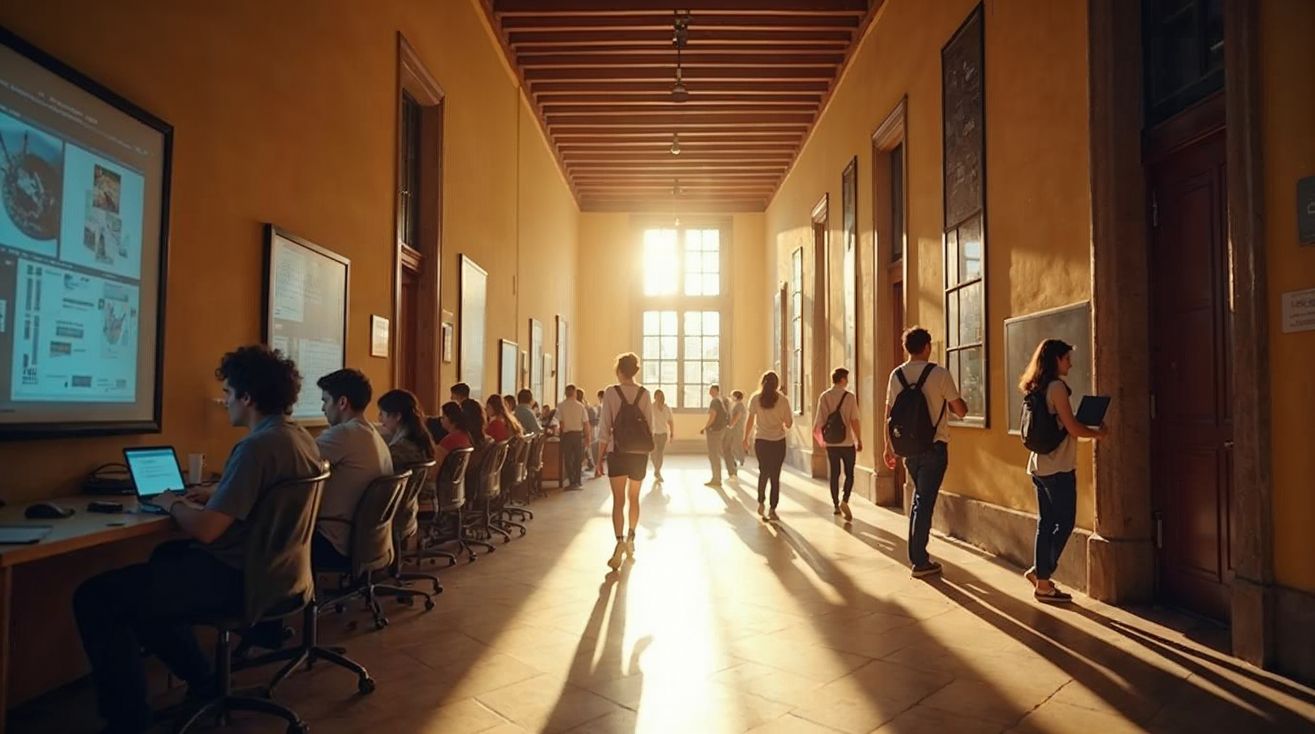

In the sun-drenched corridors of Portuguese universities, a quiet revolution is taking place. It’s not marked by rallies or loud declarations, but rather by the hum of servers and the flicker of screens. Digital transformation is reshaping higher education in Portugal, promising to change how students learn and how educators teach. But what does this transformation really mean for a nation known for its rich history and tradition? Let’s dig into the heart of this evolving landscape.
Embracing the Digital Shift
The move towards digital transformation in Portuguese higher education is not just about swapping chalkboards for tablets. It’s a comprehensive shift that involves integrating technology into every aspect of academic life. From online portals that streamline administrative tasks to virtual classrooms that bring the world to students’ fingertips, the change is palpable. According to a report by EdTech Portugal, there has been a significant increase in digital tools adoption, with universities investing heavily in infrastructure to support this new wave.
But the journey is not without its challenges. Many institutions face hurdles such as limited budgets and the need for staff training to effectively use new technologies. And let’s be honest, adapting to rapid change can be daunting for those accustomed to traditional methods. Yet, the potential benefits — more personalized learning experiences, better access to resources, and enhanced communication — are too significant to ignore.
The Role of Online Learning Platforms
One of the most visible aspects of digital transformation is the rise of online learning platforms. These platforms have become a lifeline for students, especially during the recent global disruptions. Universities have partnered with international edtech companies to offer a plethora of online courses, making education more accessible than ever before.
Consider the University of Porto, which has been at the forefront of this change. By collaborating with platforms like Coursera and edX, they’ve opened doors to global knowledge, allowing students to supplement their traditional curriculum with courses from top universities around the world. This trend not only broadens academic horizons but also prepares students for an increasingly digital workplace.
Challenges and Opportunities
Despite the promising landscape, digital transformation in Portuguese higher education is not without its unique challenges. The digital divide remains a pressing issue, as not all students have equal access to the necessary technology or internet connectivity. This is a problem that universities are keenly aware of and are actively seeking solutions for, such as providing devices and enhancing campus Wi-Fi networks.
Moreover, there’s the question of data privacy. With more information being stored online, ensuring the security of students’ personal data is paramount. Universities are investing in robust cybersecurity measures to protect against breaches, but the evolving nature of cyber threats requires constant vigilance.
Yet, the opportunities are vast. Digital transformation can lead to more efficient research processes, better collaboration between institutions, and even a more sustainable campus environment by reducing paper use. It’s about creating a holistic educational ecosystem that benefits everyone involved.
The Future of Education in Portugal
Looking ahead, the future of education in Portugal is bright, albeit with some clouds on the horizon. The ongoing digital transformation promises to make higher education more inclusive, flexible, and aligned with the needs of the modern world. But success will depend on how well institutions can balance the adoption of new technology with the preservation of Portugal’s educational values.
To truly thrive, universities must foster an environment where students are not just passive recipients of information but active participants in their learning journey. This means encouraging critical thinking, creativity, and collaboration — skills that are essential in the digital age.
As we stand on the cusp of this educational revolution, one can’t help but feel a sense of excitement mixed with a touch of apprehension. But isn’t that the nature of change? It’s a chance to innovate, to grow, and to usher in a new era of learning that respects tradition while embracing the future.
So, whether you’re a student, an educator, or simply an observer, keep an eye on this space. You might just find yourself inspired by the possibilities that digital transformation holds for Portuguese higher education. And who knows? You might even want to be a part of it.
If you’re intrigued by the potential of digital transformation and want to explore more or share your thoughts, don’t hesitate to reach out. Let’s keep the conversation going — because education, after all, is a journey best traveled together.


