
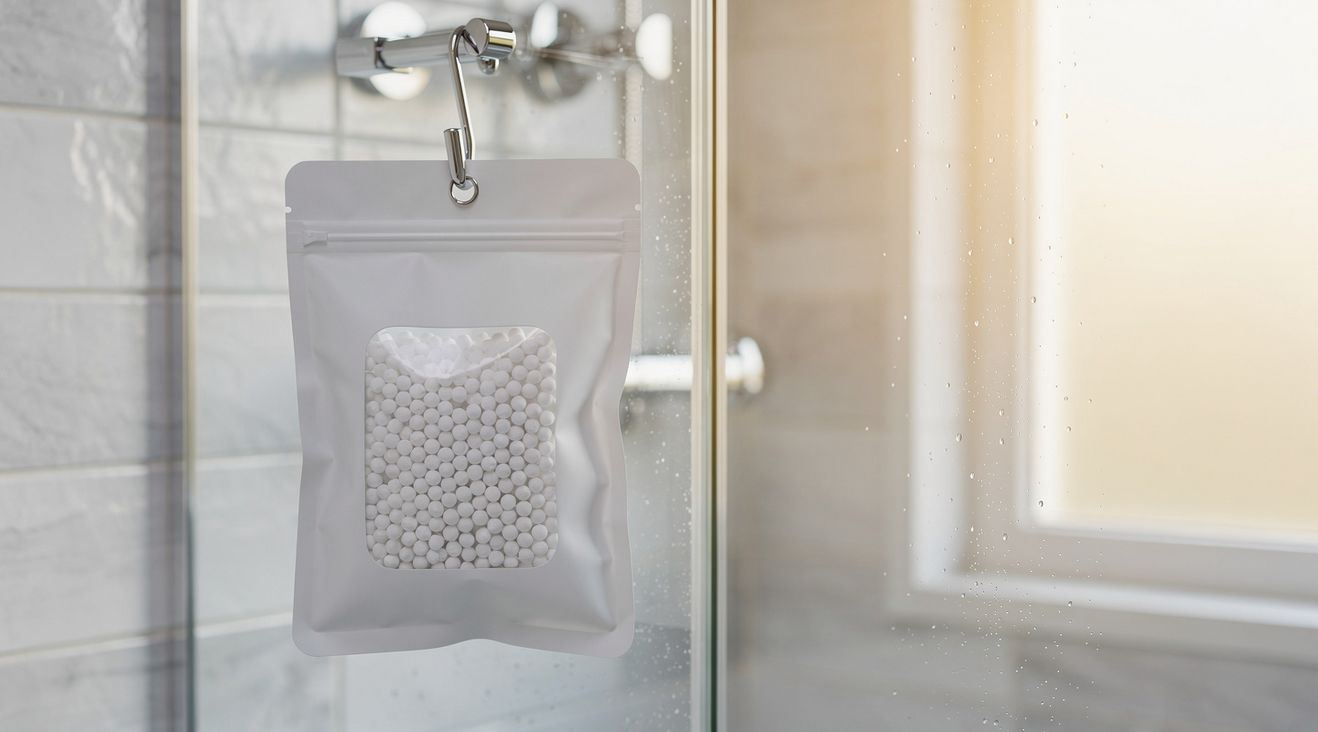
Hang it by the shower and say goodbye to moisture: the bathroom hack everyone loves

The bathroom mirror fogs up within seconds of stepping out of the shower. Towels stay damp for hours. There’s a faint mustiness that no amount of ventilation seems to shake. You’ve tried cracking the window, wiping down surfaces, even running the exhaust fan longer. Yet the problem returns with predictable regularity, especially as seasons change and humidity climbs. For anyone living in an apartment or older home with limited air circulation, this isn’t just an annoyance—it’s a slow-moving battle against moisture that feels unwinnable.
What if the answer wasn’t about fighting harder, but about redirecting? A deceptively simple approach has been gaining real traction in homes across the country: hanging an absorbent object directly by the shower to intercept moisture at its source. It sounds too basic to work, which is precisely why most people overlook it. There’s no technology involved, no installation required, and the materials cost almost nothing. Yet the results—less mold, fresher air, faster-drying towels—speak for themselves once you see them.
This isn’t about replacing proper ventilation or deep cleaning. It’s about understanding how moisture actually moves in a confined space, and using that knowledge to change the game.
The silent moisture trap that works in plain sight
Hot water from a shower pushes humidity levels in a small bathroom to genuinely tropical levels within minutes. That water vapor has to go somewhere. It either settles on every cold surface—mirrors, tiles, grout, fabric—or it gets absorbed by something strategically placed in its path. The physics is straightforward; the solution is even simpler.
A hanging dehumidifier bag, typically filled with silica gel or crystal compounds, does exactly what its name suggests: it pulls moisture from the air. Place one directly by the shower rail, and you’re essentially positioning a moisture guard at the point where steam is densest. The bag fills with water over time—visible proof that something is actually working. A DIY alternative made from a breathable fabric pouch filled with rock salt, silica beads, or even baking soda achieves the same effect at a fraction of the cost.
What makes this approach effective is timing and placement. By intercepting moisture during the shower itself and in those critical minutes afterward—when humidity is at its peak—you’re stopping a significant portion before it can spread throughout the room and embed itself in walls, grout lines, and textiles. The condensation still happens, but with less intensity and persistence.
How placement and maintenance actually determine success
The technique requires almost no skill, but it does require specificity. The absorber needs to live close enough to feel the steam, but not so close that it gets directly splashed. A shower rail hook, a suction cup fastened to tile, or even the back of the shower door works well. Too far away—tucked behind a basket of supplies or hanging near the sink—and the bag becomes decorative rather than functional.
Equally important is the refresh cycle. Store-bought dehumidifier bags typically need replacement every three to six weeks, depending on how much moisture they’ve collected. DIY pouches filled with homemade absorbents need even more regular attention. The crystals or salt will eventually clump, lose effectiveness, and essentially become dead weight. Many people hang a bag and forget about it, which kills the benefit entirely.
Yet here’s the surprising part: even imperfect maintenance still beats doing nothing. Checking and refreshing a bag once every two or three weeks—rather than religiously every week—still produces noticeable results in condensation reduction, odor control, and mold prevention. The barrier to entry is low enough that consistency becomes easier.
The rarely discussed reality of small-space humidity
Most bathroom design advice assumes adequate ventilation: a working exhaust fan, ideally a window, space for air to actually move. In reality, many urban apartments and older homes fall short on all counts. A tiny bathroom with one small window and an exhaust fan that sounds like it’s struggling for its life creates a fundamentally different problem. Opening the window in winter means heating the entire building. Running the fan longer just moves humid air around without really solving anything.
The hanging absorber sidesteps these limitations entirely. It doesn’t require infrastructure upgrades or architectural changes. It works in bathrooms with poor ventilation, with no windows at all, or in climates where humidity is relentless. According to EPA guidance on household moisture control, reducing humidity levels before they reach condensation-producing levels is one of the most practical approaches for preventing mold growth in spaces with limited ventilation options.
What this method also does, subtly but importantly, is shift your relationship to the problem. Instead of feeling like you’re fighting against invisible forces, you can actually see the moisture you’re capturing. The filled bag becomes tangible proof that the dampness has somewhere to go besides your walls and textiles. That psychological shift—from battling an intangible problem to managing a visible one—often leads to better overall bathroom maintenance habits.
Why this works better than you’d expect
The real effectiveness lies in understanding when and where moisture concentrates most heavily. During and immediately after a hot shower, humidity spikes dramatically in a confined space. A strategically placed absorber captures a meaningful portion of that moisture during this peak phase. The room still becomes humid overall, but the absolute peak is blunted, and the moisture doesn’t penetrate as deeply into materials.
Over weeks and months, this compounding effect becomes visible. Black spots on silicone seals appear more slowly. Paint doesn’t bubble and peel. Grout stays cleaner. Towels and bath mats dry faster. The mirror takes longer to fog completely. None of these changes happen overnight, but they’re the kind of incremental improvements that actually matter in daily life.
“I stopped fighting my bathroom. I just gave the moisture somewhere better to go.” – Homeowner who implemented the hanging absorber method
Combining the hanging absorber with other small habits amplifies results further: cracking the door open after showers, hanging towels on a separate rail rather than over the shower itself, and even a quick wipe of the mirror or tiles before leaving the bathroom. None of these require effort, but together they create a system that’s genuinely drier.
The practical gap between theory and habit
The biggest limitation of this method isn’t technical—it’s behavioral. People buy a dehumidifier bag, hang it with enthusiasm, and then forget about it entirely. Maintenance doesn’t happen. The bag eventually loses effectiveness, and the person concludes the whole idea doesn’t work. The method itself is sound; the execution falls apart.
This is also why combining the hanging absorber with actual ventilation—even modest ventilation—works better than relying on either alone. A working exhaust fan moves air; the absorber captures concentrated moisture. Together, they’re more effective than either in isolation. If your bathroom has zero ventilation, the absorber helps but can’t fully solve the problem on its own.
Cost is negligible enough that it’s not a barrier. A store-bought dehumidifier bag costs a few dollars and lasts weeks. Making your own pouch costs almost nothing. The real investment is the occasional attention required to keep it working. For most people, that trade-off is worth it.
The broader question becomes less about whether this hack works and more about why such a simple solution isn’t more widely known or recommended. Part of the answer is that it doesn’t solve every moisture problem—it’s one tool, not the complete solution. Part of it is simply that the bathroom industry has more profit in selling fancy exhaust fans and dehumidifiers than in teaching people to hang a bag of salt. And part of it is that small, low-tech solutions don’t generate the kind of attention that viral gadgets do, even when they actually work.


