
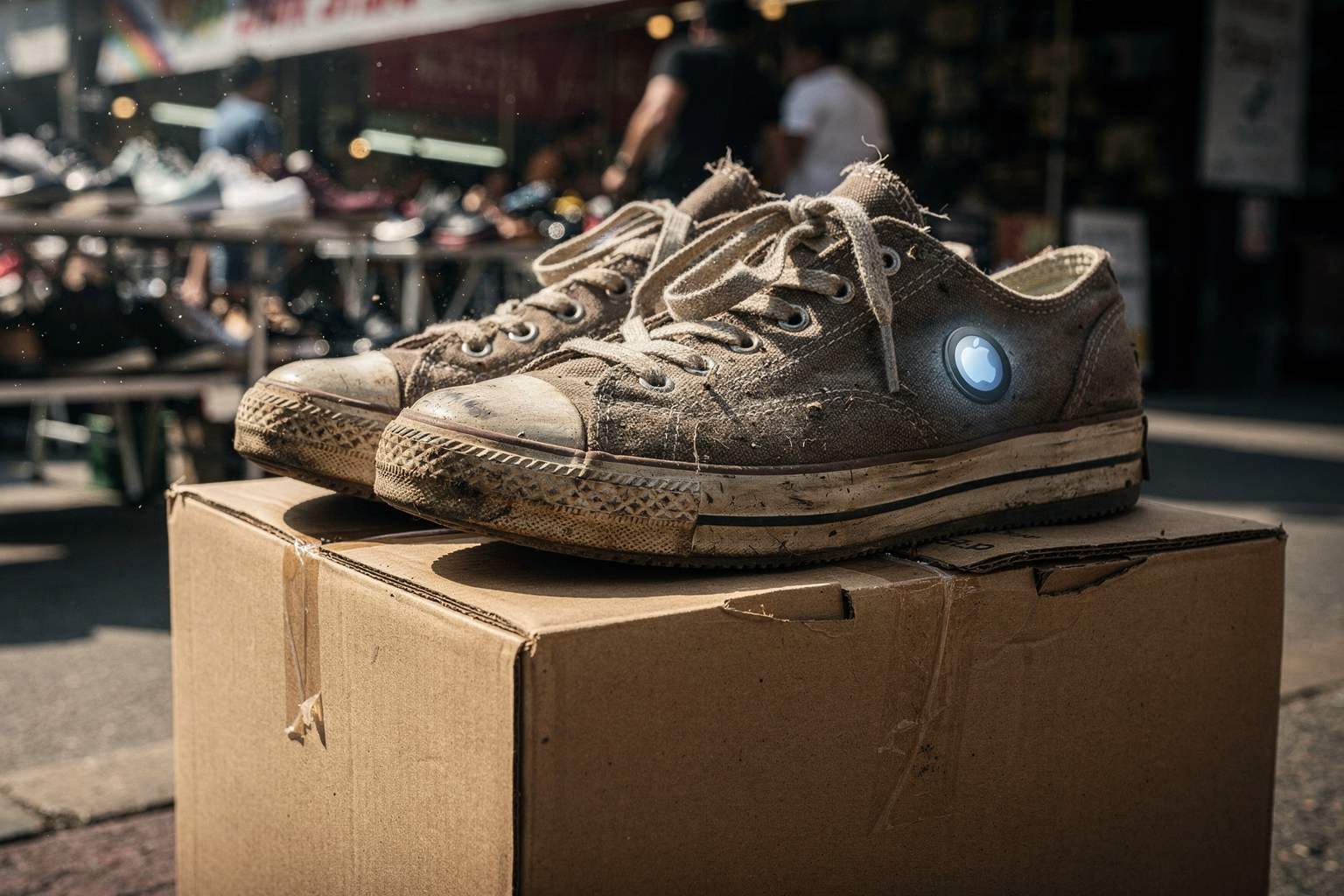
He hid an AirTag in his sneakers before donating them to the Red Cross and later discovered them being resold at a market

The sneakers were nothing remarkable—just a bit worn, those pesky grey laces that refused to stay clean. They were the kind of shoes you slip on without a second thought. On a lazy Sunday afternoon, Thomas found himself sorting through a pile of “keep or give away?” and decided these sneakers would be better off on someone else’s feet. He dropped them into a Red Cross donation bin, feeling that small, satisfying glow of doing a good deed while clearing some space.
But here’s where the story takes a twist. Before walking away, Thomas slipped an Apple AirTag beneath the insole—an innocuous little disc that vanished once the shoe was back together. A few weeks later, his phone buzzed with a new location ping. The sneakers were back on the map, far from where he expected.
When a good deed quietly turns into a tracking story
The ping came on a Saturday morning, mid-coffee sip. Thomas glanced at his screen and froze. The AirTag, dubbed “Sneakers – Donation,” was no longer at the Red Cross center. Instead, it was showing up right smack in the middle of a bustling open-air market. Picture rows of stalls, bargain hunters galore, and somewhere in that throng, his “donated” shoes, now with a price tag.
Curiosity got the better of him. Within the hour, he found himself at the market, weaving through stands selling everything from counterfeit perfume to second-hand clothes. Would he actually find them, he wondered?
He didn’t have to search long. There they were, on a folding table nestled between half-wilted plants and a stack of random T-shirts. The same scuffs on the side, the same stubborn stain on the toe. A hand-written sign read: “Branded shoes – $15.” The seller, a man in his fifties, simply shrugged when asked where they came from. “A guy brings me bags,” he said. “Clothes, shoes, whatever. I sell them, we split.”
Understanding the donation journey
This scene plays out in cities worldwide, revealing a reality rarely questioned: what truly happens to donations once they leave our hands? Charities are often overwhelmed with clothes, shoes, and toys. They sort and keep some, send others abroad, and occasionally pass items to intermediaries who resell them by weight. Between those transactions, a web of traders emerges.
Nothing in this chain is necessarily illegal, but it does break an emotional contract. You believe you’re donating to those in need, yet someone else sees potential for profit. The AirTag merely illuminated this hidden path, sneaker by sneaker.
How to donate without feeling played
There’s a simple step that changes everything: pausing between “I don’t want this anymore” and “I’ll toss it in the nearest charity bin.” Take a moment to consider who runs the bin and what they actually do with donations. Legitimate charity containers typically have clear logos and contact information. In contrast, anonymous bins behind supermarkets often lack transparency.
Before dropping off your shoes or clothes, scan any QR code present or do a quick online search. Transparent organizations don’t hide their processes. Furthermore, sort your donations as if giving them to a friend. Avoid items with ruined soles or T-shirts you’d be embarrassed to see someone wear. These often cost charities money in waste disposal, where resellers step in to buy mixed lots.
What this AirTag story really changes for us
Thomas’s sneaky AirTag didn’t just uncover a backdoor market; it raised a question we rarely voice: when we give, are we donating an item, or a story we’ve imagined about its journey? In this case, the shoes likely ended up on someone willing to pay a modest price. Not necessarily a bad ending, but the dissonance comes from the gap between intention and reality. You envision a shelter, a refugee camp, or a struggling student. Instead, you find a wire rack next to imitation designer belts under a neon “Promo” sign.
To ensure your donations stay on the most ethical path possible, consider these steps:
- Look for recognizable logos like Red Cross, Oxfam, or Salvation Army.
- Check if the charity publishes an annual report detailing donation destinations.
- Opt for direct drop-offs at shops or centers rather than anonymous bins.
- Inquire if a portion of donations is sold to finance the charity’s work.
- Reserve high-quality items for charities you know personally or for someone specific.
Ultimately, the AirTag story encourages us to rethink how we donate and what we expect from the process. It’s not just about giving objects but also ensuring that the journey aligns with our values. So next time you find yourself with a bag of old clothes, take a moment to ponder their final destination. And if you’re curious, maybe slip an AirTag in, just for fun. But remember, transparency and conscious choices make all the difference.


