
Helping restaurant servers clear your table is not kindness; it reveals a disturbing sign of your real personality

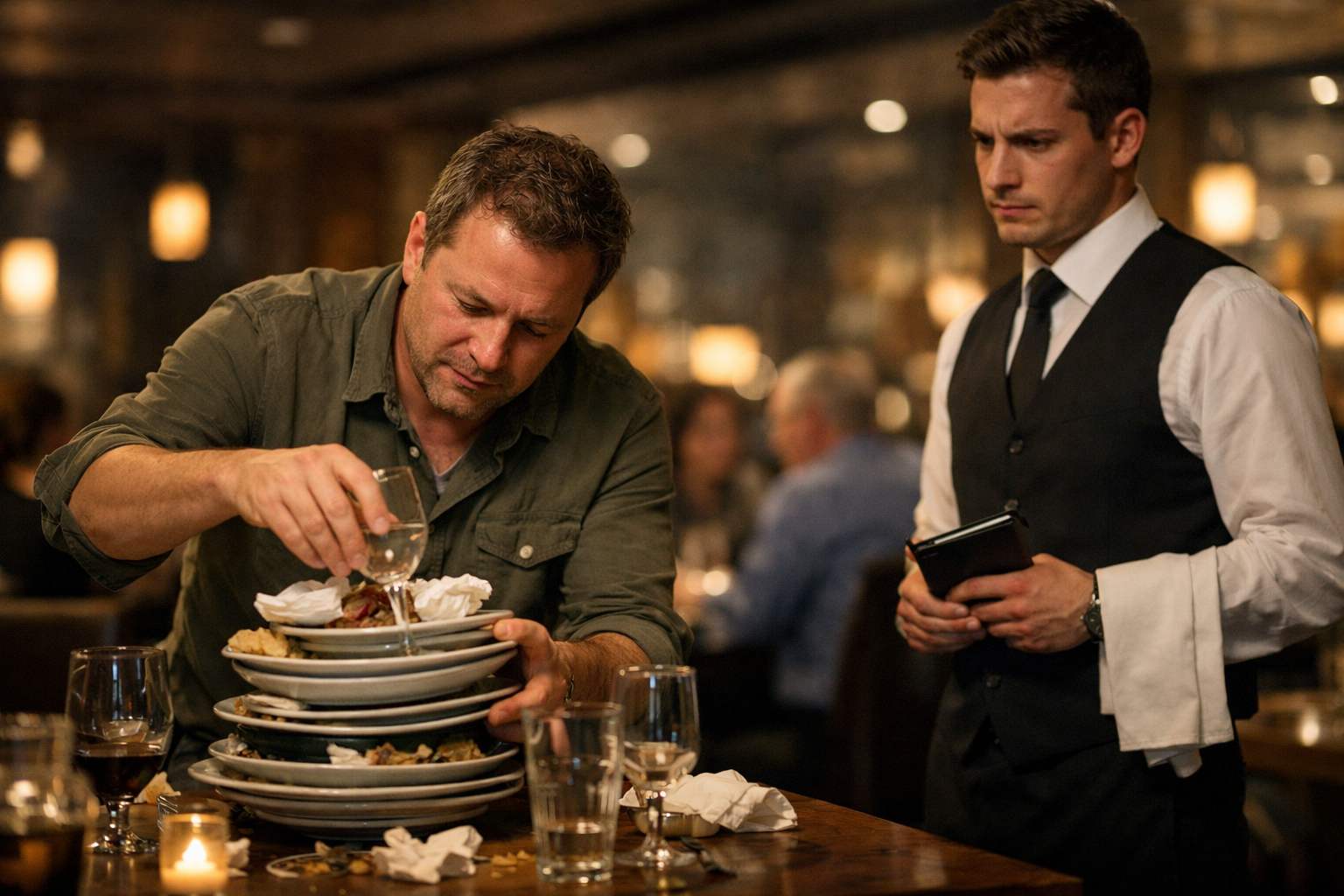
The plates were still warm when you stacked them. A half-full glass of wine perched dangerously on the edge of your improvised tower, cutlery balanced precariously. The server approached with a tight smile, that tiny flicker in their eyes you read as gratitude. You felt proud, almost virtuous. You were “helping”.
But then you noticed the way they subtly re-arranged everything on their tray. The way their shoulders tensed, just for a second. Something in that moment doesn’t quite match the story we tell ourselves about being considerate diners.
This growing ritual in restaurants reveals more about our psychology than our politeness. What we interpret as kindness might actually expose uncomfortable truths about control, anxiety, and the need to perform goodness in public spaces.
When helping becomes a performance of superiority
There’s this growing ritual in restaurants: the guest who rushes to stack plates, push glasses aside, wipe crumbs into a neat little pile with the side of their hand. From the outside, it looks kind. Proactive. Polite.
Look closer and it starts to feel like a performance. When a server reaches for your dishes, their movements are trained, almost choreographed. They know the weight of a loaded plate, the balance of a full tray, the rhythm of a crowded dining room. Your “help” cuts through that rhythm like someone clapping off-beat in a concert.
A server recently shared a story about a Friday night rush. Table of six, corporate crowd, lots of jokes about “being part of the team”. As he came over to clear, one guest proudly handed him a leaning tower of plates, stacked with knives pointed outwards. He caught it, but just barely. A knife slid, grazing his wrist. The guest laughed and reached for the remaining dishes again.
What looks like kindness can hide something else: control, discomfort, or a need to feel superior. When you can’t stand a “messy” table for more than two minutes, that’s not generosity, that’s your anxiety needing order.
The psychology behind compulsive table clearing
According to research in behavioral psychology, people who feel compelled to “help” in structured environments often struggle with boundaries and control issues. The dining room becomes a stage where these tendencies play out in miniature.
When you jump in to “show” the server how fast and efficient you are, that’s not empathy, that’s ego. Real kindness in restaurants rarely looks like a performance. It’s quieter. It respects expertise. It leaves space for the person whose actual job it is to handle the plates, the spills, the chaos.
“We don’t need plate-stacking heroes. We need people who see us as people, not as background staff in their personal kindness movie.” – Restaurant industry professional
The most telling part is how selective this “helpfulness” becomes. Nobody really does this every single day. We remember to “help” only when we feel watched, or when the restaurant is busy, or when we need to reassure ourselves that we’re one of the “good” customers.
What servers actually need from you
If you genuinely want to be considerate at a restaurant, the most effective gesture is surprisingly simple: stop touching everything. Let plates sit where they are. Keep cutlery on the plate, not scattered across the table. Don’t build towers, don’t hand things mid-air, don’t shove dishes to the edge of the table like you’re prepping them for takeoff.
The best help you can give a server is a clear path: elbows in when they approach, bags off the floor where they walk, kids not climbing under their feet. That’s where accidents happen, not in the imaginary war against an “uncleared” table.
There’s also the question of power. A dining room is one of the rare public spaces where someone serves and someone is served, face to face. That dynamic can bring out the worst in people without them even noticing. Stacking plates can become a way to claim moral high ground: “Look at me, I’m not like those rude customers.”
What works better is staying present and human. Ask the server, “Do you want me to move these, or is it easier if I leave them?” and then actually listen to the answer. Some will say yes. Others will politely decline. You can redirect your urge to help into gestures that count: patience when the kitchen is backed up, eye contact when they speak, a genuine thank you that sounds like you mean it.
The often ignored workplace safety implications
Restaurant work involves significant physical risk that amateur helpers rarely consider. Professional servers balance multiple plates using specific techniques developed through training and experience. When customers pre-stack dishes, they often create unstable configurations that increase injury risk.
Sharp knives positioned at odd angles, glasses wedged between plates, hot surfaces touching cold ones – these “helpful” arrangements can lead to cuts, burns, and dropped trays. The server must then quickly assess and reorganize everything while maintaining their professional demeanor, adding stress to an already demanding job.
The liability issues extend beyond immediate safety. If a customer’s stacking causes an accident, who bears responsibility? The ambiguity creates additional workplace tension that servers navigate while depending on tips for their livelihood.
Restaurant managers report that well-intentioned customer interference contributes to more workplace incidents than most people realize. The rhythm of professional service depends on predictable patterns, not spontaneous assistance from untrained participants.
Reading the real signals at your table
The way you behave at a restaurant table exposes more of your personality than your social media ever will. How you talk to someone serving you, how you react to waiting, how you handle minor discomfort – that’s your real unfiltered self.
Helping clear plates might feel harmless, even sweet. For some, it truly is just a reflex learned at home. For others, it signals something deeper: an obsession with control, a fear of appearing lazy, a subtle belief that they know better than the professional in front of them.
Next time you feel that urge to tidy the table before the server arrives, pause for half a second. Ask yourself: am I doing this for them, or for me? That tiny moment of honesty opens the door to a more grounded kind of respect, one that doesn’t need a performance or an audience.
The dining room reveals how we handle power imbalances in real time. Some will keep stacking plates, certain they’re doing good. Others will learn to read the room differently, to sit with the crumbs and empty glasses, and to let people do their jobs with dignity.