
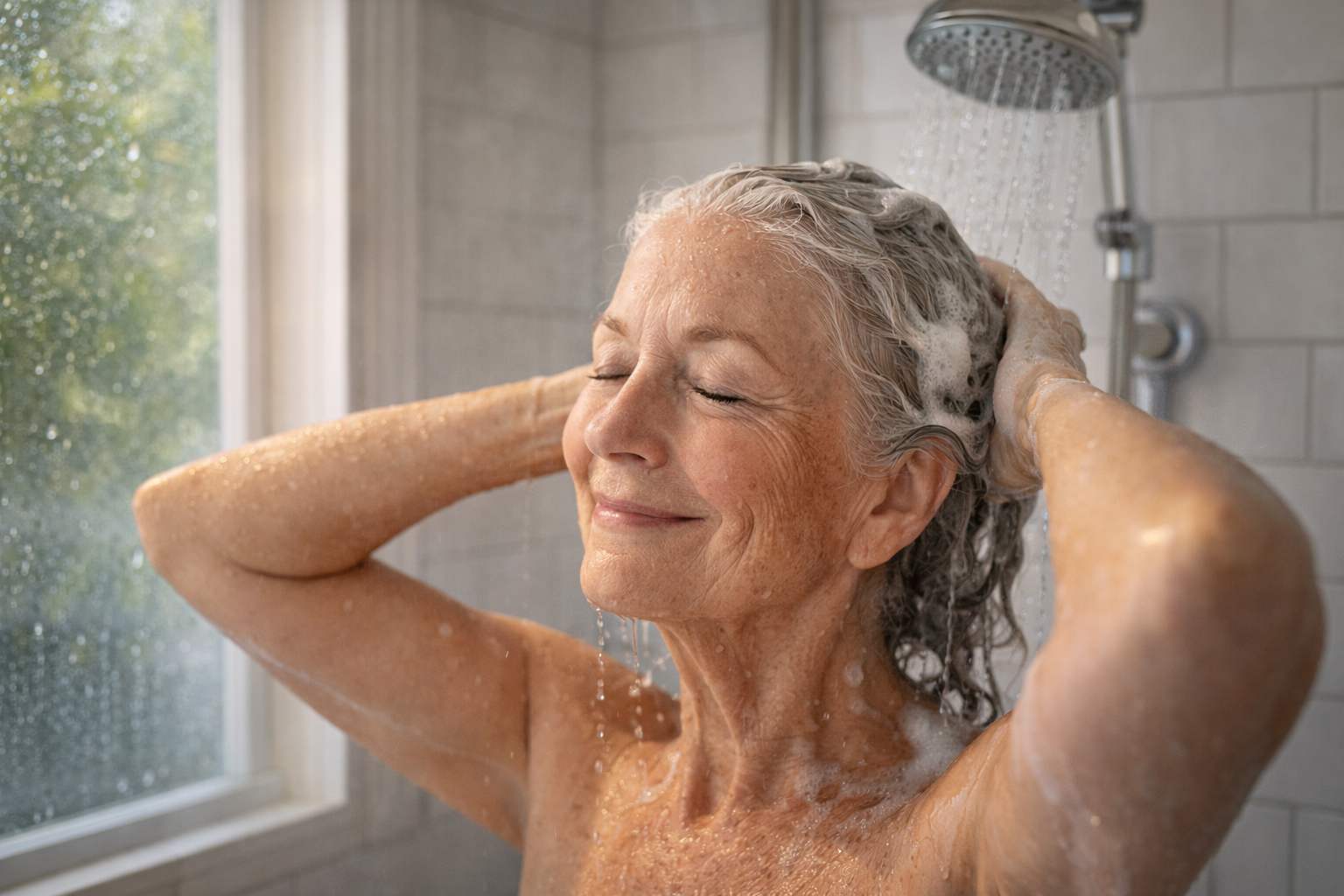
Hygiene after 60: the shower frequency that truly keeps you thriving, not once a day or once a week

A Tuesday morning in a small apartment, somewhere between the kettle and the pill organizer. Marie, 68, stands in front of her shower, towel in hand, doing the math of her changing body. “I washed my hair Sunday… I showered fully Thursday… Yesterday I just did a quick wash at the sink.” The calendar of her skin has shifted.
She used to shower every single day when she was working as a nurse. Now, her skin feels thinner, the hot water tires her out, and the bathroom tiles look suspiciously slippery. Yet the old voice in her head whispers: “A proper person showers daily.” She looks at the mirror and wonders what if that voice is simply wrong for life after 60.
Walk into any locker room in a senior gym at 8 a.m. and you’ll hear the same quiet conversation. One woman confesses she only showers twice a week in winter. Another laughs that she does a “cat wash” most days and a full shower on Sundays. The real topic isn’t about fancy creams or miracle serums. It’s about energy, balance, and safety—and a quiet fear of smelling “old” while trying not to damage what’s left of their protective skin barrier.
After 60, your skin doesn’t follow the old rules
Dermatologists repeat it often: past 60, skin produces less sebum, holds less water, and recovers more slowly. Washing too often strips away the little natural protection that remains. The logic is simple, almost boring, and still hard to accept for people who grew up equating “clean” with “just showered.”
According to research from dermatological associations, those who shower every day have significantly more complaints of itching, tightness, flaking, and small cracks on legs and arms, especially in colder climates. Those who reduce full-body showers but keep focused washing of key areas report feeling cleaner and more comfortable with less effort and fewer products.
Water plus soap dissolves oils. On young, oily skin, that can be helpful. On older, dryer skin, that same habit becomes aggressive housekeeping. When the skin barrier is damaged, it doesn’t just itch. The risk of eczema, infections, and even small wounds increases, especially on the legs where circulation is already weaker. Past 60, the real hygiene goal shifts quietly: not to scrub everything every day, but to protect the invisible shield your skin already built for you.
The rhythm that actually works: targeted hygiene instead of ritual
Here’s the routine that more geriatric dermatologists gently recommend, away from marketing slogans: two to three full-body showers per week. On the other days, a focused wash—armpits, groin, feet, private parts and any skin folds—using a washcloth with lukewarm water and a gentle cleanser. Hands and face, of course, several times a day, but with mild products and no harsh scrubbing.
Take Jacques, 72, a retired mechanic. He used to shower every single morning at 6:30 a.m., even after he left the garage for good. It was his “I’m a serious man” ritual. Then came winter. His shins started itching so much at night that he was waking up to scratch. Red patches appeared on his back. His doctor didn’t sell him a fancy cure. She simply said: “Cut your showers to three a week, use lukewarm water, and wash the rest at the sink.” Two months later, the itching was mostly gone. Jacques admitted he actually felt cleaner, because he wasn’t constantly dealing with irritated, flaky skin.
What’s happening underneath is quietly logical. With fewer full showers, the skin’s microbiome—that mix of bacteria, fungi, and tiny organisms—stabilizes. The good guys stay, the troublemakers calm down. Hot daily showers plus strong soap blow up that balance. They strip lipids, disturb the microbiome, and trigger a cycle of dryness and irritation that has people buying more and more lotions to fix a problem the water created in the first place.
The practical shifts that change everything
So what does a skin-friendly shower after 60 actually look like in practice? First, cut the length. Ten minutes maximum, five is even better, with comfortably warm—not steaming hot—water. Use a fragrance-free, gentle cleanser only on strategic zones: armpits, groin, private areas, and feet. Arms, legs, and torso often get by just fine with a quick rinse with water on non-sweaty days.
Pat dry instead of rubbing, especially on arms and legs, then apply a simple moisturizer while the skin is still slightly damp. This tiny timing hack locks in comfort for hours.
“After 65, my goal with patients isn’t to have them shower more,” explains Dr. Léa Martin, dermatologist in Lyon. “My goal is to have them shower smarter. Less heat, less soap, less risk—more comfort.”
The biggest trap past 60 isn’t “not being clean enough.” It’s over-washing out of habit and guilt, then living with tight, burning, or itchy skin as if that’s just part of aging. Many people push themselves to shower daily even when they’re dizzy, tired, or anxious about slipping. That’s not hygiene—that’s pressure. There’s no medal for taking a full shower on days when a careful sink wash would do the job and protect both your skin and your balance.
The rarely examined barrier between health and habit
What dermatologists don’t always say out loud is that the shame of “not showering enough” often causes more damage than the actual reduction in showering frequency. An older adult who feels guilty, stressed, or conflicted about their bathing routine may experience stress hormones that actually worsen skin conditions. The anxiety itself becomes part of the problem.
There’s also the overlooked dimension of bathroom safety. Every additional shower increases the risk of falls, dizziness, and slipping—particularly for those with balance issues or taking medications that affect blood pressure. A shorter, less frequent routine isn’t laziness. It’s a practical acknowledgment that bathroom time after 60 carries real physical risk. By reducing unnecessary showers, you’re not compromising hygiene. You’re protecting yourself from a genuine hazard that nobody talks about openly.
The unspoken truth is that our cultural obsession with daily showers was never evidence-based for older adults. It emerged from marketing campaigns in the mid-20th century when antibacterial soaps were being sold as the solution to “natural body odor.” For healthy older adults with stable living situations, that daily ritual is simply not necessary. What matters is staying clean where it counts.
A new relationship with cleanliness after 60
When you shift from “daily shower or I’m dirty” to “targeted hygiene that suits my age,” something else changes in the background. Your relationship with your body becomes less about discipline, more about alliance. You start noticing textures: when your skin feels soft instead of papery, when your legs don’t itch at night, when stepping into the shower doesn’t feel like facing a test.
You discover that real freshness also comes from clean clothes, aired-out rooms, moving your body, drinking water, and sleeping better. Not just from a hot blast of water every morning. There’s also a quiet relief in saying goodbye to certain myths. No, you don’t become “neglectful” because you don’t shower every single day at 70. No, a full shower is not the only valid form of hygiene.
The best rhythm is the one where your skin is calm, your energy is preserved, and your bathroom feels safe, not hostile. Some weeks you’ll do three showers. Some weeks, if you’re sick or exhausted, you’ll lean on sink washes and a bit of dry shampoo. That flexibility isn’t laziness. It’s adaptation. After 60, thriving often starts with doing less, but doing it better—and listening to what your body actually needs instead of what convention insists you owe it.


