
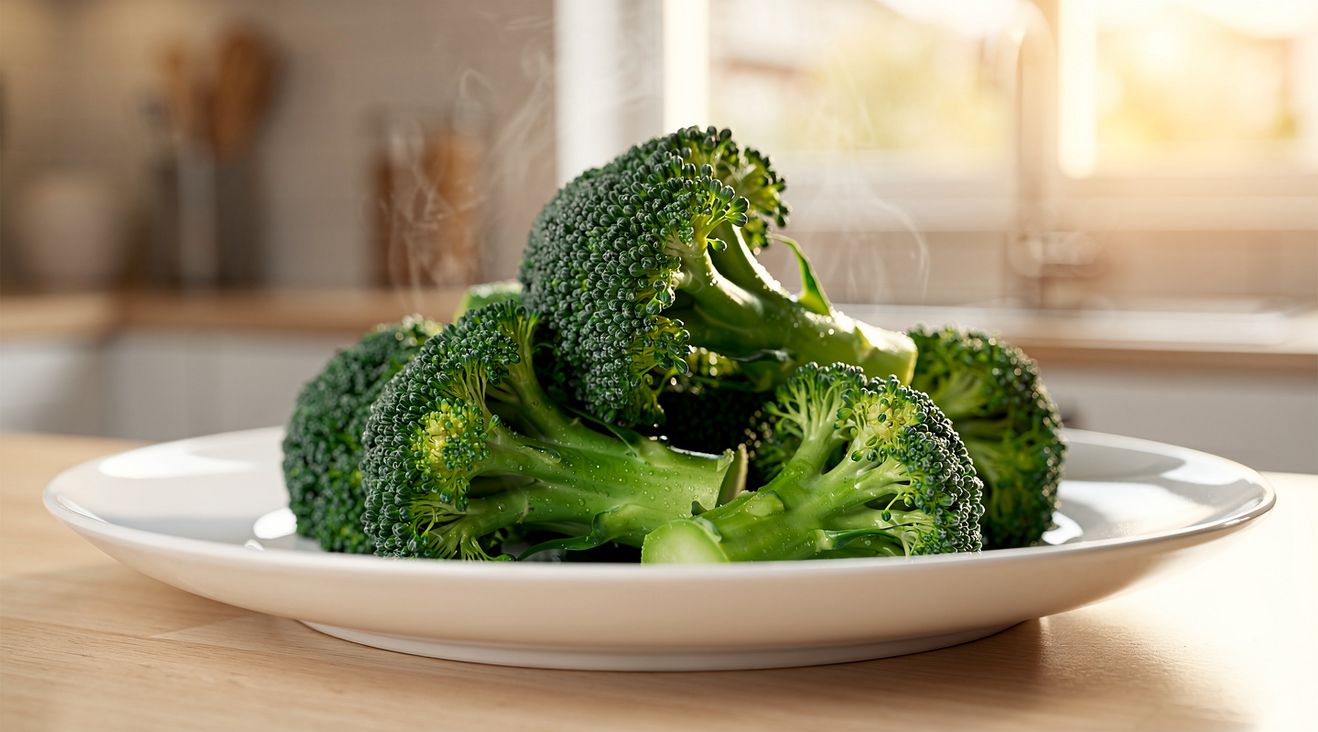

We all know someone who treats broccoli like a chore. They steam it until it’s gray, boil it into submission, or buy it raw with vague intentions that never materialize. The vegetable sits in the refrigerator, slowly wilting, a quiet reminder of unfulfilled health promises. Yet the problem isn’t broccoli itself. The problem is that we’ve been cooking it wrong, and that matters far more than most of us realize.
The gap between what broccoli could deliver nutritionally and what actually lands on our plates is enormous. Not because the vegetable is deficient, but because the two most common cooking methods—boiling and eating it raw—happen to be nearly the worst ways to unlock its protective compounds. It’s a frustrating irony: the more we try to eat healthy, the more we might be undermining our own efforts through simple kitchen mistakes.
What makes this worth paying attention to now is that the science behind optimal broccoli preparation has become clearer, and it points toward a genuinely different approach. Not harder, not more time-consuming, but fundamentally different in how it treats the nutrients locked inside those green florets. Understanding this shift changes not just how we cook, but why we might actually want to keep cooking broccoli, week after week.
The nutritional cost of our default cooking habits
Most households operate with two broccoli strategies, both inherited from habit rather than thought. Raw florets appear on vegetable platters and in lunchbox containers, looking virtuous and requiring no effort. Boiled broccoli gets made on busy weeknights, soft and quick, tossed into a pot of water like pasta and abandoned until tender.
The problem is what happens to the actual nutrients during these processes. Raw broccoli, while technically intact in its vitamin content, presents a digestive challenge many people don’t want to acknowledge. The tough cell walls require serious chewing, and unless you’re willing to work for it, much of the nutritional benefit passes through your system unabsorbed. For people with sensitive digestion or those eating quickly between tasks, raw broccoli becomes less a health food and more a source of bloating and discomfort.
Boiling presents the opposite problem: heat and water strip away the very compounds we’re eating broccoli to get. Vitamin C, heat-sensitive antioxidants, and the sulforaphane precursor all leach into the cooking water or degrade under prolonged heat. According to research in nutritional biochemistry, boiling broccoli for extended periods can eliminate up to 50 percent of its vitamin C content and significantly reduce antioxidant capacity. The longer the pot sits there bubbling, the worse the damage becomes.
The real cost isn’t just the lost nutrients themselves, but the lost opportunity. When people invest effort into eating healthier and don’t feel results or taste satisfaction, they quietly give up. The broccoli goes back to being something they avoid, and the habit dies before it can compound into actual health benefits.
Why steaming changes the entire equation
The cooking method that keeps appearing in research and test kitchens is almost embarrassingly simple: brief steaming, roughly 3 to 5 minutes depending on floret size. The approach sounds modest because it is, yet the results are measurably different from both raw and boiled approaches.
What happens in those few minutes is that heat softens the vegetable’s cell walls just enough to make nutrients more bioavailable. Your digestive system doesn’t have to work as hard to break down the fibers, which means the antioxidants and vitamins can actually be absorbed rather than passing straight through. Meanwhile, the short duration and absence of sitting water preserve most of the vitamin C and heat-sensitive compounds that boiling destroys. The broccoli emerges vivid green, still slightly firm, tasting more vibrant than anything that’s been drowned or left raw.
There’s also a practical advantage that shouldn’t be minimized: it tastes good. Lightly steamed broccoli has a pleasant sweetness and tender-but-not-mushy texture that actually appeals to people eating it. When a healthy choice also tastes appealing, adherence isn’t a problem. You’ll actually cook it again next week, and the week after that.
The technical gesture is remarkably straightforward. Cut florets into even pieces, bring water to a boil in a pot with a steamer basket, add the broccoli, cover, and set a timer. Three minutes for tender-crisp. Five minutes if you prefer something slightly softer. The moment it reaches that bright color and slight firmness, remove the basket immediately so residual steam doesn’t continue cooking it into mush.
The sulforaphane strategy that bridges raw and cooked
Inside broccoli exists a biochemical partnership that’s worth understanding because it shapes how to get the most from this vegetable. An enzyme called myrosinase reacts with a compound called glucoraphanin to produce sulforaphane, a powerful antioxidant linked with anti-inflammatory and protective cellular effects. The reaction happens when broccoli is chewed or cut, but heat damages myrosinase, reducing how much sulforaphane forms.
This creates a genuine tension: you need heat to make the broccoli digestible and improve nutrient absorption, but too much heat destroys the enzyme that creates sulforaphane. The solution is beautifully practical. Steam the broccoli briefly, then add a small amount of raw cruciferous food as a finishing touch—freshly grated raw broccoli stem, sliced radish, or even a small spoonful of mustard, which contains active myrosinase. This combination gives you the digestibility benefits of gentle cooking plus the enzyme activity of raw vegetables.
“The key isn’t pursuing nutritional perfection at every meal,” explains a registered dietitian who works with nutrition optimization. “It’s about stacking small advantages: slightly shorter cooking time, a bit more chewing, a touch of raw. Over weeks and months, that consistency is what actually shows up as improved health markers.”
The practical execution is simple. After steaming, sprinkle a few thin slices of raw radish on top, or grate fresh broccoli stem, or add a dab of mustard as a condiment. Finish with olive oil and lemon juice, which add healthy fats that increase nutrient absorption and provide flavor that makes the whole thing worth eating.
The gap between intention and habit
Knowing the optimal method is one thing. Actually doing it consistently during ordinary weeks is another. Most people don’t fail at broccoli because they lack knowledge; they fail because the routine doesn’t fit into real life patterns. You plan to eat healthier, buy fresh broccoli with good intentions, then watch it wilt in the refrigerator while you reach for easier options.
The difference between success and abandonment is often smaller than people think. Having a steamer basket actually visible and accessible makes steaming happen. Knowing that 3 to 5 minutes fits perfectly into the time your pasta or grains are cooking means broccoli becomes part of the routine rather than an extra task. Building in a finishing touch—oil, lemon, a sprinkle of salt—transforms it from “something I should eat” into “something I actually want to eat.”
There’s also value in understanding that consistency matters more than perfection. Eating lightly steamed broccoli two or three times a week, done properly, delivers more cumulative health benefit than eating raw broccoli once or twice a week and boiling it once, all inconsistently. The body responds to patterns repeated over weeks and months, not to isolated perfect meals.
What escapes usual commentary about this transition
Most articles about broccoli preparation focus on the cooking method itself, but they rarely address the psychological and practical barriers that determine whether someone actually maintains this habit. The shift from boiled or raw to lightly steamed requires not just a technique change, but a reframing of what cooking broccoli means in your weekly routine.
There’s also the matter of sensory expectations. People raised on overcooked cafeteria broccoli often expect broccoli to taste a certain way—soft, bland, slightly sulfurous. Lightly steamed broccoli tastes completely different: slightly sweet, bright green, almost delicate. This can be jarring initially, and it’s easy to interpret the unfamiliar taste as “undercooked” or “wrong,” even though it’s actually optimal. Acceptance of a new texture and flavor profile is genuinely part of establishing this habit, and it’s rarely discussed.
The cost-benefit analysis also matters differently than nutrition articles usually frame it. The benefit of better antioxidant preservation and bioavailability is real, but it accumulates invisibly. You won’t feel dramatically different after one properly steamed broccoli meal. Over months, people report improved energy levels, steadier blood sugar, clearer skin, better digestion—the kinds of quiet improvements that register as genuine but aren’t dramatic enough for dramatic stories. That subtlety is actually the barrier to adoption for many people: we’re conditioned to expect noticeable results, and nutritional improvements are usually just steady and understated.
Building a sustainable relationship with one simple vegetable
The most interesting aspect of this shift isn’t the cooking method itself, but what it represents about the relationship between knowledge and behavior. We have the information. We know that light steaming preserves more nutrients than boiling. We know that brief cooking plus a raw touch optimizes sulforaphane formation. Yet knowledge alone doesn’t change what we eat.
The actual question becomes: What makes an eating pattern sustainable? Not what’s theoretically optimal, but what someone will actually do on a Tuesday evening when they’re tired, hungry, and short on time. The answer usually involves simplicity, taste appeal, and fitting into existing routines rather than creating new ones.
Broccoli, in this sense, becomes a small test case for how we approach health generally. Not as punishment disguised as virtue, not as a chore to check off, but as a quiet, available tool that works better when handled with slightly more intention. The method matters less than the commitment to trying it, and the commitment matters less than the willingness to adjust it until it becomes genuinely part of how you feed yourself.


