
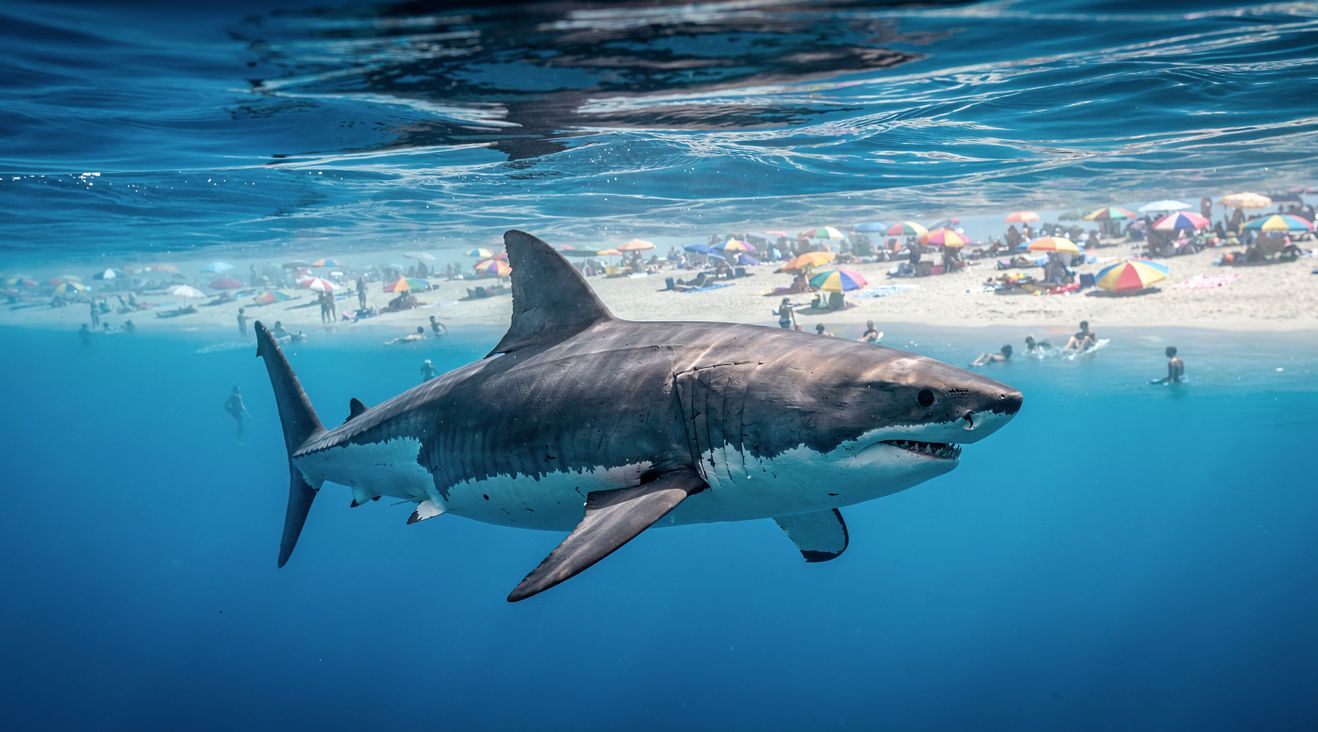

A 14-foot great white shark named Contender has resurfaced near North Carolina’s Outer Banks after weeks off the radar, reigniting conversations about sharing coastal waters with apex predators. For most beachgoers, the ocean remains an abstract playground—a place for leisure and escape. The presence of a 1,653-pound apex predator gliding beneath familiar swimming spots forces a different kind of reckoning. This isn’t about panic or exaggeration. It’s about understanding what it truly means to inhabit a world we don’t fully control.
The shark’s appearance raises questions that extend beyond the sensational headlines. What does ocean conservation actually look like when the creatures involved inspire both fascination and fear? How do we balance legitimate safety concerns with the ecological importance of these animals? These questions matter now more than ever, as climate change alters migration patterns and human activity continues reshaping marine habitats.
The tracking technology reshaping our understanding of sharks
Contender was first tagged in January near the Florida-Georgia border by the marine research organization OCEARCH. The shark vanished from satellite tracking for nearly a month—a normal occurrence since the devices only transmit when the dorsal fin breaks the surface. His reappearance near Pamlico Sound revealed something crucial about great white behavior that most people never consider: these journeys are deliberate, purposeful, and tied directly to survival.
According to OCEARCH’s research program, great white sharks undertake epic migrations stretching up to 620 miles between winter feeding grounds in the south and summer habitats along the northeastern coast. The Outer Banks serve as critical refueling stations where these animals accumulate fat reserves for the next leg of their journey. At approximately 30 years old, Contender represents a mature male in his prime—precisely the kind of specimen that carries the most valuable biological data.
The tracking itself represents a quiet revolution in marine science. Rather than assuming shark behavior based on limited observation, researchers now gather real-time movement data that reveals patterns invisible to traditional study methods. This information doesn’t just satisfy curiosity—it directly informs conservation strategies and helps predict where human-shark interactions might occur.
What the migration patterns reveal about ocean health
Tracking a shark like Contender provides an unexpected window into broader environmental conditions. These migrations aren’t random. They follow food sources, water temperatures, and breeding cycles refined over millions of years. When migration patterns shift or timing changes, it signals something about the ocean itself.
“Great whites begin their late spring and early summer migration around this time, traveling from warm wintering grounds in the south to their summer feeding areas along the northeastern U.S. coast and Atlantic Canada”—Dr. Harley Newton, OCEARCH’s chief scientist and veterinarian
Rising ocean temperatures alter these carefully calibrated routes. Overfishing depletes the seal and fish populations that attract great whites to specific regions. Coastal development removes critical habitat. When scientists follow an animal like Contender, they’re essentially reading an environmental health report written in migration routes and feeding patterns. The shark becomes a messenger about conditions we often overlook from land.
The rarely discussed gap between awareness and behavior change
Knowledge about shark presence doesn’t automatically translate into behavioral change among beachgoers. People read headlines about Contender and feel a momentary thrill, then return to their routines largely unchanged. This gap between knowing something exists and actually adjusting how we live reveals something important about human risk perception.
The data shows shark attacks remain extraordinarily rare. Statistically, a person is far more likely to be struck by lightning or injured driving to the beach than encounter a great white. Yet this rational knowledge often fails to override the visceral response to knowing a massive predator inhabits waters where children play. That emotional reality shapes policy, beach closures, and conservation funding in ways that pure statistics cannot predict.
The real challenge isn’t providing information. It’s fostering genuine behavioral integration—where knowledge about sharks actually changes how people interact with coastal environments. This requires moving beyond facts into something deeper: a recalibration of how we understand ourselves as inhabitants of a shared world.
Why great whites matter beyond the dramatic narrative
Apex predators like great whites maintain the structural integrity of marine ecosystems. They regulate fish populations, influence prey behavior, and shape the distribution of species across vast ocean territories. Remove them, and cascading effects ripple through food webs in ways that ultimately affect human fisheries and ocean productivity.
The conservation significance of tracking animals like Contender extends beyond protecting the sharks themselves. Each tagged individual becomes part of a larger dataset that informs marine protected areas, fishery regulations, and climate adaptation strategies. This research directly supports the health of oceans that provide food, oxygen, and economic resources to billions of people.
Yet funding for shark research remains modest compared to charismatic megafauna like whales or polar bears. The combination of fear and unfamiliarity keeps great whites in a peculiar position—they inspire awe and dread simultaneously, often overshadowing rational assessment of their ecological value.
The expanding complexity of coexisting with ocean life
Sharing coastal waters with large predators isn’t new—humans and sharks have occupied the same spaces for millennia. What’s changed is our awareness of it, our ability to track it, and our capacity to disrupt it. Climate-driven shifts in migration patterns mean sharks may appear in unfamiliar locations or at unexpected times. This unpredictability creates management challenges that have no perfect solutions.
Beach communities face genuine tensions between tourism revenue, resident safety, and conservation responsibility. Some advocate for shark culling or exclusion programs. Others argue for education and coexistence. Neither approach fully resolves the underlying tension between human use of coastal environments and the presence of animals that occupied those spaces first.
The story of Contender matters not because it represents imminent danger, but because it forces these conversations into the open. Every sighting, every tagged migration, every close encounter reminds us that our expansion into natural spaces comes with genuine complexity that can’t be solved through either total protection or total control.
Human relationship with ocean predators will continue evolving as climate change accelerates, populations shift, and our monitoring capabilities improve. The questions we ask about Contender today shape the decisions we’ll make about marine conservation for decades to come.


