
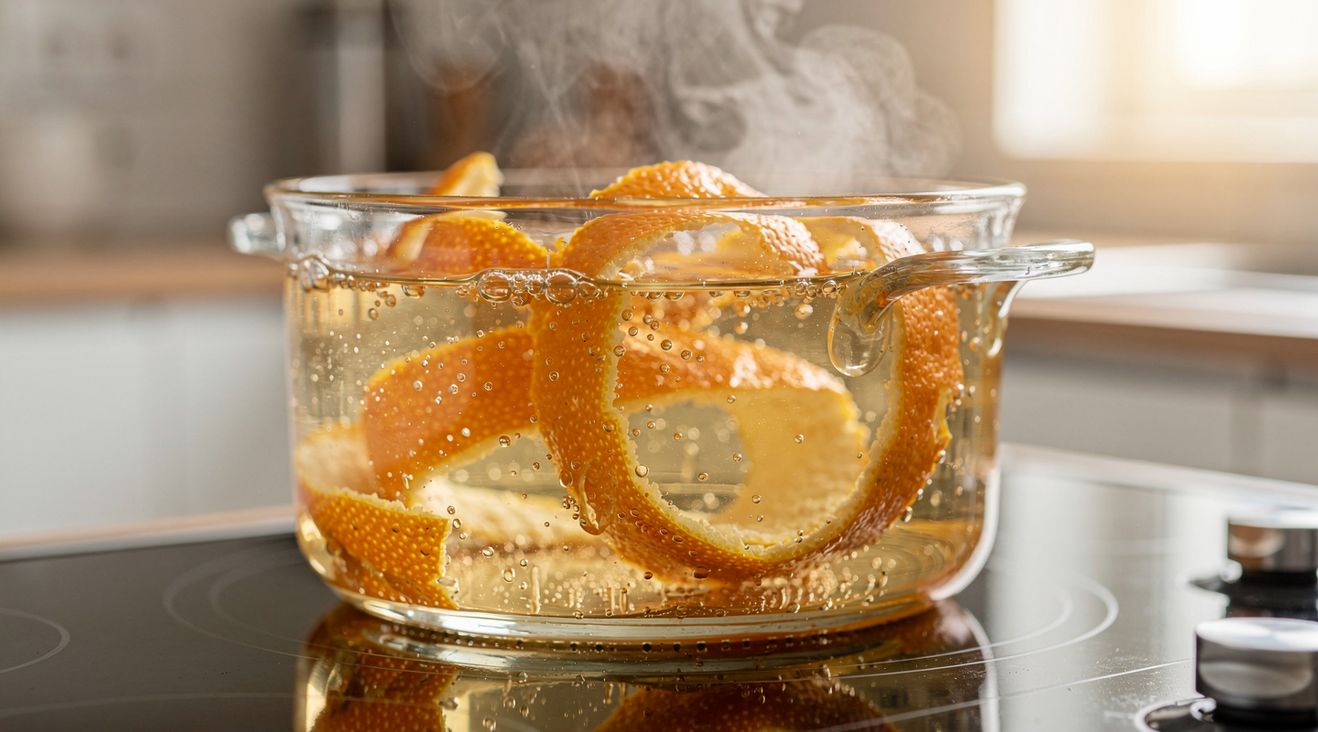

There’s a particular moment in sustainable living when you realize that your kitchen waste might be more valuable than you thought. Orange peels destined for the compost bin, combined with vinegar sitting in your pantry, transform into something that challenges the entire commercial cleaning industry. This isn’t about trendy wellness culture or social media performance. It’s about the genuine effectiveness of boiling orange peels in vinegar as a cleaning solution, and why this practice deserves serious consideration in any household budget and environmental strategy.
The appeal extends beyond cost savings. What makes this method noteworthy is the convergence of three separate factors: the rising awareness of toxic chemical exposure in homes, the documented effectiveness of natural alternatives, and the practical reality that most households already possess these ingredients. The trend hasn’t emerged from nowhere. It reflects a genuine shift in how people approach household maintenance, driven by both health consciousness and growing skepticism toward marketing claims surrounding commercial products.
Understanding why this works requires looking past the romantic “natural is better” narrative and examining the actual chemistry involved. There’s science here, not just sentiment.
The chemistry that actually matters
White vinegar brings acetic acid to the equation, a compound with proven antimicrobial properties that breaks down grease and mineral deposits. This isn’t conjecture. The acidity dissolves buildup on surfaces through a straightforward chemical reaction. Orange peels contain limonene and other terpenes—compounds that are genuinely effective at cutting through stubborn residues and neutralizing odors at a molecular level.
When heat accelerates the process, it releases these citrus essential oils from the peel into the vinegar solution, creating a cleaner with dual functionality. The mild acidity won’t damage most household surfaces the way harsher commercial cleaners can. According to research from the Environmental Protection Agency, many conventional household cleaners contain volatile organic compounds that persist in indoor air long after application, contributing to respiratory issues and allergic reactions in sensitive individuals.
What distinguishes this approach from buying a bottle of “natural” cleaner at the store is control. You’re creating the concentration yourself, adjusting the ratio based on your specific cleaning needs. There’s no hidden ingredient list, no preservatives maintaining shelf stability, no marketing language obscuring what you’re actually spraying into your home.
Preparation matters more than you’d expect
The practical execution is straightforward: collect your orange peels, submerge them in white vinegar, and bring the mixture to a boil for ten to fifteen minutes. The timing isn’t arbitrary. Extended heat beyond this window can degrade the essential oils you’re trying to extract, reducing effectiveness. Cooling, then straining into a spray bottle creates a concentrate that remains effective for several weeks when stored properly.
The real consideration emerges when you move past basic kitchen surfaces. Glass responds beautifully to this cleaner, streaking less than many commercial products. Tile accepts it well. Wooden furniture requires caution—vinegar’s acidity can damage certain finishes, and you need to test before committing to broader application. Natural stone surfaces like granite or marble present a genuine limitation. The acidity etches these materials over time, making this solution unsuitable regardless of how effective it might otherwise prove.
Dilution becomes a strategic decision. Undiluted concentrate tackles baked-on grease or hard water deposits. Diluted with water at a one-to-one ratio, it handles regular surface maintenance without the pungent vinegar smell that lingers in some households. The fresh citrus scent generally emerges as the dominant fragrance after a few hours of application and ventilation.
The practical reality of waste reduction
There’s something genuinely satisfying about redirecting food waste into functional household product. Oranges consumed for breakfast become cleaning supplies for bathrooms. This represents actual waste reduction, not the performative variety. Over a year, a household that consumes fresh citrus regularly can eliminate dozens of plastic bottles that would have contained commercial cleaners.
This connects to broader sustainability questions, but with important nuance. Creating your own cleaner reduces plastic consumption and chemical manufacturing. It doesn’t solve systemic environmental problems, nor does it address the agricultural impact of commercial citrus production. What it does accomplish is measurable reduction in individual household chemical footprint and tangible participation in resource optimization.
The limitations that deserve honest discussion
This method doesn’t replace specialized cleaners for every situation. Disinfection against specific pathogens follows different rules than surface cleaning. Vinegar and citrus oils may reduce microbial loads generally, but achieving laboratory-verified disinfection against particular bacteria or viruses requires different approaches, different concentrations, and different contact times. For bathroom sanitization beyond basic cleaning, you might need something different.
Hard water deposits respond well to vinegar. Soap scum on glass responds well to vinegar. Baked-on food residue responds well to vinegar. Stubborn mold in grout presents a different challenge. While the antimicrobial properties help, established mold colonies require more aggressive treatment or physical removal. Treating this cleaner as a universal solution invites disappointment.
Storage and shelf life matter more than casual approaches suggest. Essential oils degrade over time, especially with exposure to light and heat. Mixing large batches assumes you’ll use them quickly, or you’re accepting diminishing returns as the cleaner ages. Fresh batches maintain superior potency, which means more frequent preparation for households with regular cleaning needs.
The health conversation that extends beyond marketing
Most households expose themselves daily to volatile organic compounds through conventional cleaning products.
“Natural cleaning solutions using vinegar and citrus oils can significantly reduce indoor air exposure to VOCs common in commercial cleaners” – Environmental Health researcher
This matters particularly for people with asthma, allergies, or respiratory sensitivities. It matters for children in households where cleaning happens frequently. It matters for anyone spending considerable time in closed spaces with limited ventilation.
This isn’t about choosing between effective cleaning and health. It’s recognizing that effectiveness and safety exist on a spectrum, and where you position yourself reflects your priorities and constraints. Some households have members requiring stronger antimicrobial action. Others prioritize air quality above all. Most navigate somewhere in between, using this cleaner for routine maintenance and other products for specific challenges.
The question becomes less about whether this method works—it demonstrably does for common household cleaning tasks—and more about integration into a realistic cleaning routine that addresses your home’s particular demands without unnecessarily exposing your household to chemical compounds you can reasonably avoid.


